
The Puppy Price Is Just the Start of the Budget
When families ask how much a miniature Dachshund costs, they usually mean the price of the puppy. That number matters, but it is the smallest part of what you will spend over a dog’s life. Miniature Dachshunds often live well into their teens, so you are planning for twelve to sixteen years of food, vet visits, supplies and care.
This guide does not quote dollar amounts, because prices in your area, your vet’s fees and your dog’s health will differ from anyone else’s. Instead, it lists every cost category in the order you will meet them and shows you how to price each one with real quotes from businesses near you. By the end you will have a monthly figure and a yearly figure that belong to your family, not an average from somewhere else.
One more point before the categories. The purchase price and the lifetime cost are linked. A puppy from health-tested parents, raised with good care, can mean fewer unplanned vet bills later. The last section covers that, and it is worth reading before you compare prices between breeders. If you are still deciding on a breeder, our guide to how to vet a Dachshund breeder covers the questions to ask.
The First-Year Shopping List: Crate, Bed, Ramps, Harness and Puppy Supplies
The first year has the biggest cluster of one-time purchases. Most of these items can be priced in an afternoon of browsing online and in local pet stores.
Here is what a Dachshund household usually needs:

- A crate sized for an adult miniature, with a divider if you want to use it for a growing puppy. Buying one that fits the adult dog saves you from buying twice.
- A bed and washable bedding. Buy a spare cover so one can be in the wash.
- A pen or gates to keep the puppy in a safe area while you cannot watch.
- Ramps or pet stairs for the couch and bed. Dachshunds have long backs and short legs, and jumping on and off furniture is something most owners try to limit.
- A harness instead of a collar for walks. A well-fitted harness spreads pressure across the chest instead of the neck. Puppies outgrow their first harness, so plan to buy a second size.
- Leash, ID tag and a microchip registration if the chip is not already registered to you.
- Bowls, a slow feeder if your vet recommends one, and a food storage container.
- Toys and chews suited to a small mouth.
- Cleaning supplies for accidents, especially an enzyme cleaner made for pet messes.
- Nail clippers or a grinder, a soft brush, and dog toothpaste and a toothbrush.
Price each item twice: once for a basic version and once for a sturdier one. Then pick the version that fits your family and write down that number.
Expect to replace some of these. Puppies chew beds, outgrow harnesses and wear out toys, so carry a small replacement line in your yearly budget.
Food, Treats and Chews: The Monthly Cost That Never Stops
Food is the cost you will pay every month for the dog’s entire life. A miniature Dachshund eats little compared with a large breed, which keeps the bag cost manageable, but the quality you choose changes the price per bag a great deal.
To price this line, look at three things:
- The cost of the bag you intend to buy and how many days it lasts for a small dog. The feeding guide on the bag gives a starting amount, and your vet can adjust it.
- Treats and training rewards. Puppies in training go through a lot of small treats, so budget for them separately from meals.
- Chews and dental products, which wear out and need regular replacing.
Divide the bag price by the number of days it lasts, then multiply by thirty. That gives you a monthly food figure from your actual local price. Add treats and chews to it.
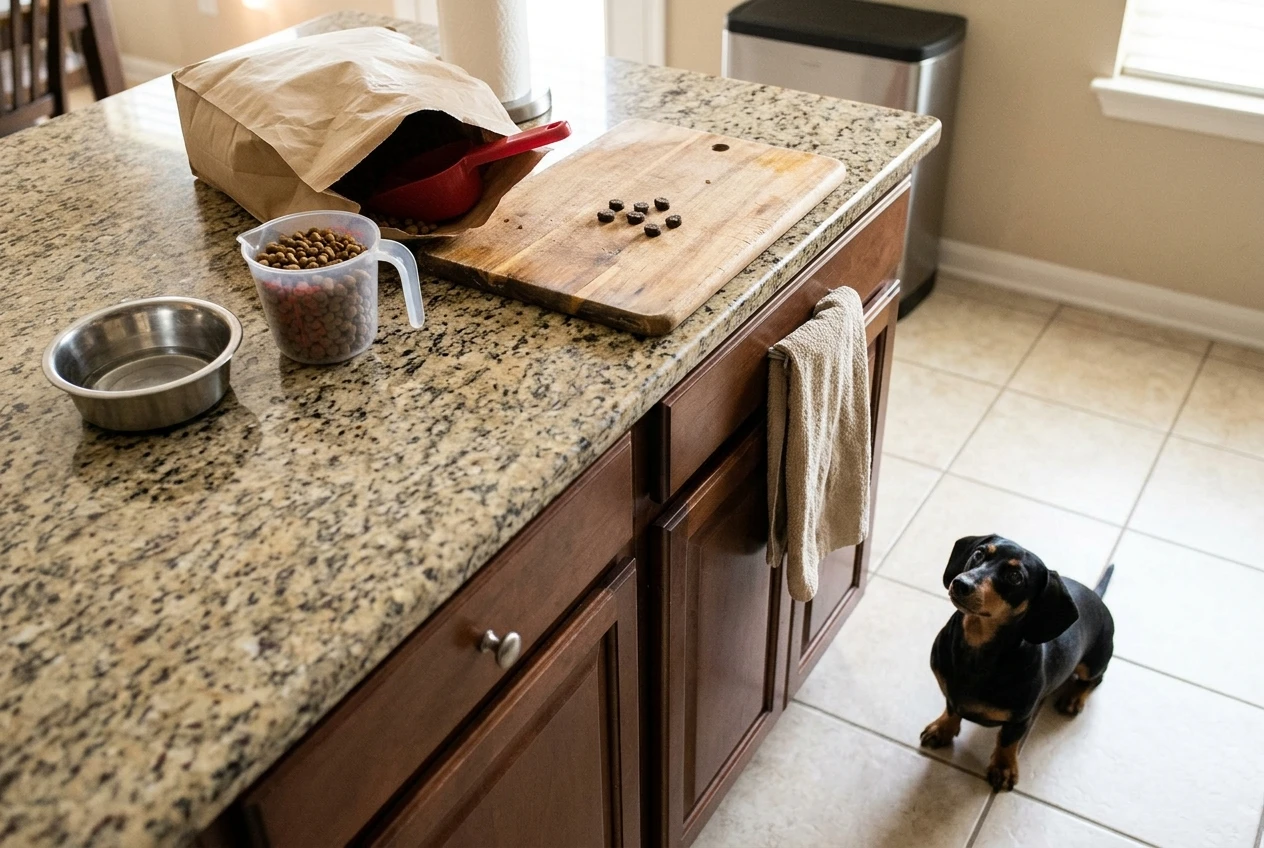
Weight matters here more than in many breeds. Extra weight puts added strain on a Dachshund’s long spine, so measuring meals and keeping treats in check is a health habit as well as a budget one. If you want to see how one breeder approaches feeding, you can read what we feed our dogs. Ask your own vet before you switch foods, since your dog’s age and health may call for something different.
Vet Care You Can Plan For: Vaccines, Preventives, Dental Cleanings and Spay or Neuter
Routine vet care is the most predictable medical cost, because most of it follows a schedule. Call two or three local clinics and ask for their fee lists. Many will give you a puppy package price over the phone.
Plan for these lines:
- Puppy exams and the vaccine series. Puppies need several visits in their first months, and each visit usually has its own exam fee.
- Yearly exams and booster vaccines for the adult dog.
- Heartworm testing and prevention, given monthly in most regions.
- Flea and tick prevention, also usually monthly and sometimes seasonal depending on where you live.
- Fecal tests and deworming, most common in the puppy months.
- Spay or neuter surgery. Ask the clinic what the quote includes, such as pre-surgery bloodwork, pain medication and the follow-up check. Also ask your vet when they recommend scheduling it for a Dachshund, since timing advice can vary.
- Dental care. Small breeds are prone to tartar and gum disease. Many dogs need a professional cleaning under anesthesia at some point, and the quote can change if extractions are needed. Daily brushing at home can help, and our guide to grooming a Dachshund at home walks through teeth, ears and nails.
Ask each clinic one more question: what does an exam cost when the dog is sick between regular visits? Knowing that number ahead of time makes an unplanned visit easier to absorb.
The Cost Families Forget: Back Problems, Emergencies and Pet Insurance
This is the category that surprises families most. Dachshunds are among the breeds at higher risk of intervertebral disc disease, often called IVDD, where a disc in the spine bulges or ruptures and presses on the spinal cord. Signs range from pain and reluctance to jump up to wobbling or loss of use of the back legs. Treatment can mean rest and medication for milder cases, or specialist imaging and surgery for serious ones.
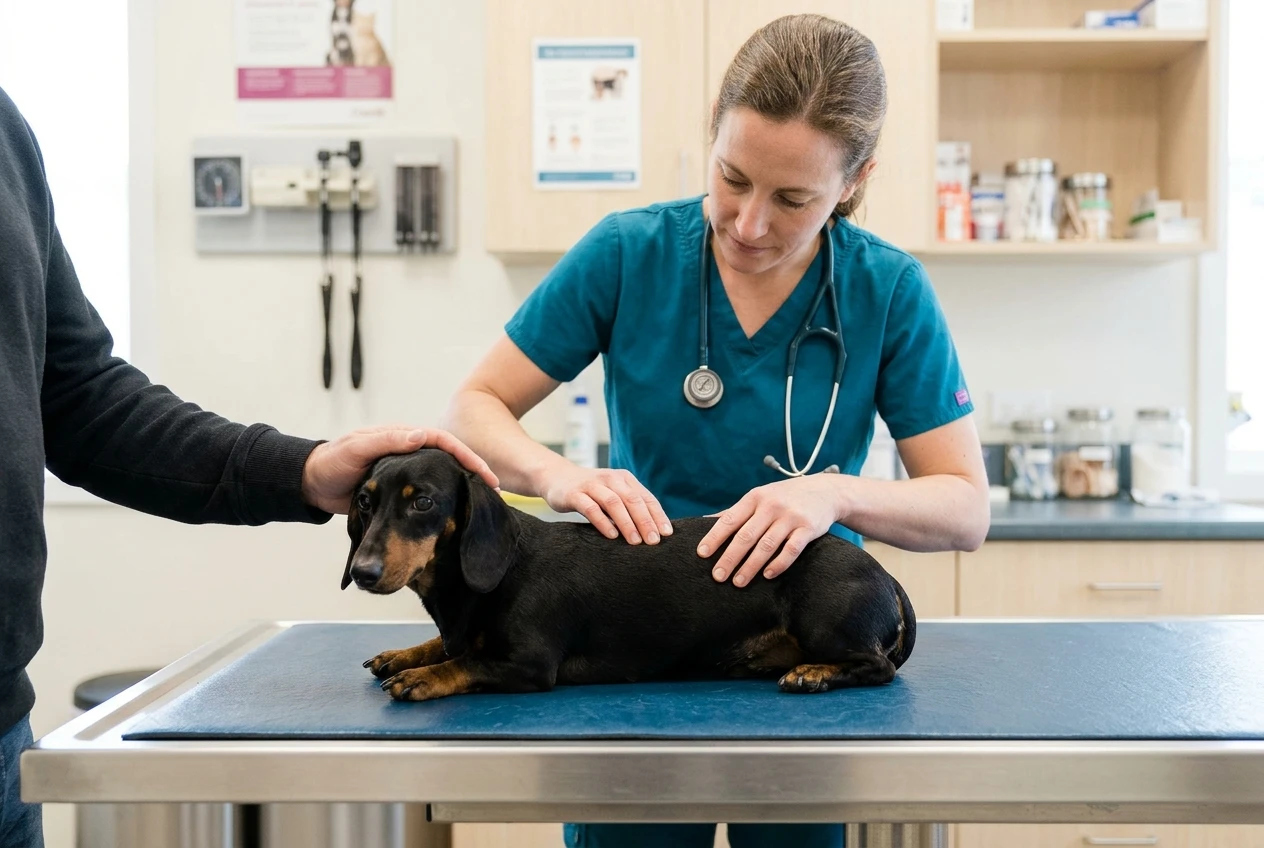
You cannot predict whether your dog will have a problem, and you cannot price it from a single number. You can, however, find out the range in your area:
- Call your nearest emergency vet and a veterinary specialty hospital and ask what an initial emergency exam costs and what spinal imaging typically costs there.
- Ask what surgery and recovery care generally cost, and whether they offer payment plans.
- Ask whether they accept third-party financing.
Then decide how you will cover it. Families usually pick one of three routes, or a mix: a pet insurance policy, a dedicated savings account, or a credit line for emergencies.
If you look at insurance, read the policy details carefully:
- Waiting periods before coverage starts for illness or injury.
- Pre-existing condition rules, which usually exclude anything that showed signs before the policy began.
- Whether back and spine conditions are covered, and whether any breed-related limits apply.
- Annual and lifetime limits, deductibles and reimbursement percentage.
- Whether the plan pays the clinic directly or reimburses you afterward.
Enrolling while the dog is young and healthy is the usual advice, since conditions that appear later are then not pre-existing. Get written quotes from a few providers for a miniature Dachshund puppy in your zip code and put the monthly premium in your budget.
Daily habits also reduce risk. Keeping your dog lean, limiting jumping and using ramps all help, and our guide to protecting your Dachshund’s back covers them in detail.
Everyday Extras: Grooming, Training Classes, Boarding and Pet Sitters
Beyond food and medical care, a few services add to the yearly total, and they vary with your coat type and your lifestyle.
Grooming. Smooth-coated Dachshunds need very little, and many families handle brushing, baths and nails themselves. Longhaired and wirehaired coats need more regular brushing, and wirehaired coats may need occasional professional work. Ask a local groomer for a quote for your coat type and how often they suggest visits. Even if you groom at home, price a nail trim at the vet or groomer as a fallback.
Training. Dachshunds are smart and strong-willed, and house training can take patience. A puppy class helps with socialization and basic manners. Look up local class fees and note how many weeks a session runs. If you want to understand what you are signing up for, read what living with a Dachshund is really like.
Boarding and pet sitters. If your family travels, you will need a plan for the dog. Get quotes from a boarding kennel and a pet sitter, then multiply the nightly rate by the number of nights you expect to be away each year. Ask about extra fees for holidays, medication or additional dogs.
Other recurring costs to check: your city or county dog license, a replacement tag, and any home changes such as a fence repair or a gate for stairs.
Senior Dachshund Years: What Changes and What to Set Aside
Many Dachshunds reach their senior years in good spirits, and the cost pattern shifts as they age. Most veterinarians suggest more frequent checkups for older dogs, often twice a year, and bloodwork to catch problems early. Ask your clinic what their senior wellness package includes and what it costs.
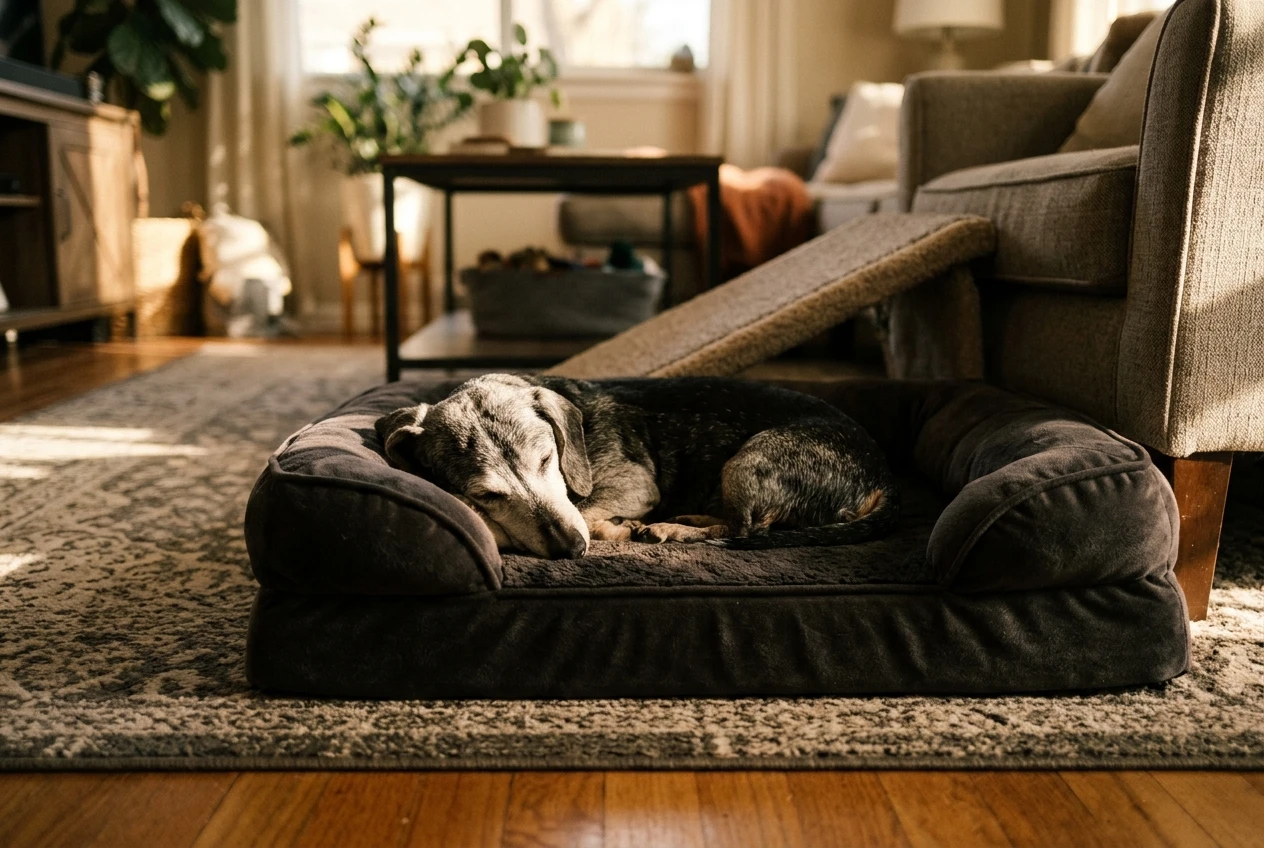
Things to plan for as your dog ages:
- More frequent exams and lab work.
- Dental care, since years of tartar can lead to cleanings or extractions.
- Joint and mobility support. Ask your vet about pain management, supplements and any therapies they recommend for an older dog with a long back.
- Eye and heart changes, which can mean medication or specialist visits.
- Home adjustments, such as non-slip rugs on hard floors, more ramps, orthopedic bedding and a harness with a handle for support.
- Special diets if your vet recommends one for kidney, heart or weight reasons.
- End-of-life care. This is hard to think about, but it is better to know the local costs of a gentle, in-clinic or at-home goodbye than to face the question for the first time in a crisis.
Pet insurance bought early may continue into the senior years, but check whether premiums rise with age and whether the policy has an age cap. If you are saving instead, the older years are when having that account matters most. Putting a small amount aside every month from the first year builds a cushion that is already there when you need it.
Build Your Own Dachshund Budget: A Simple Monthly and Yearly Worksheet

You can do this on paper or in a spreadsheet. Use a quote from a real local source for every line, and write down where the number came from so you can update it later.
Step 1: List your recurring monthly costs. Write one line for each and fill it with your quote:
- Food
- Treats and chews
- Flea, tick and heartworm prevention
- Pet insurance premium, if you choose it
- Emergency savings contribution
- Poop bags, cleaning supplies and other consumables
Step 2: List your yearly costs, then divide each by twelve.
- Annual exam and booster vaccines
- Dental cleaning or dental care products
- Grooming or nail trims
- License and registration
- Boarding or pet sitter (nightly rate times expected nights)
- Replacement gear, toys and bedding
Step 3: List your one-time costs. These are the first-year shopping list, the puppy series of vet visits, spay or neuter surgery, and any training class. Add them up and decide whether you will pay from savings or spread them across the first year.
Step 4: Add the totals.
- Monthly recurring total, plus the yearly items divided by twelve, gives your monthly budget.
- Monthly budget times twelve, plus one-time costs, gives your first-year budget.
- Monthly budget times twelve gives your ongoing yearly budget for later years.
Step 5: Stress-test it. Take your emergency vet quotes from the back-health section and ask whether your family could pay that amount within a day or two, through insurance, savings or a payment plan. If the answer is no, adjust the plan now, before the puppy comes home.
Review the sheet every year. Prices change, and so does your dog.
How Health-Tested Parents and a Caring Breeder Can Help You Avoid Surprise Bills
No breeder can promise a dog will never get sick. What a careful breeder can do is lower the odds of problems that are known to run in families and give your puppy a good start.
When you compare breeders, ask these questions:
- Which health tests were done on both parents, and can you see the results? For miniature Dachshunds, ask specifically about eye conditions such as progressive retinal atrophy, and ask what your breeder screens for in the spine and in the genetics of the line.
- What do the parents’ own histories look like, including any back problems in the family line?
- How are the puppies raised? Clean housing, regular vet checks, vaccines and deworming on schedule, and early handling all affect how a puppy starts out.
- What do the puppies eat, and how do they grow? A lean, well-conditioned puppy is easier on a long spine than one that is overfed.
- What does the breeder provide at pickup? Health records, a written contract and a plan for staying in touch after you go home are good signs.
- Will the breeder take the dog back if you cannot keep it at any point in its life?
Health testing costs a breeder money, as do good food, vet care and clean facilities, so a puppy from this kind of program may cost more up front than one from a seller who skips them. That higher price can be worth it if it lowers the chance of an avoidable vet bill later, since a single serious medical event can cost more than the difference between two puppy prices. You can read more about what responsible breeding looks like in what ethical Dachshund breeding is and why it matters.
A budget made from your own quotes lets you decide with clear eyes, and a breeder who answers your questions openly helps you start well.
If your family has run the numbers and feels ready, take a look at our available puppies and send us an inquiry. We’d love to get to know you.