
Grooming a dachshund at home takes a few basic tools and about fifteen minutes a week once the dog is used to it. The details depend on the coat, and the habits you build in the first weeks decide whether the dog tolerates handling or enjoys it. This guide covers each task in the order most owners meet them.
Why a dachshund’s coat type changes your grooming routine
Dachshunds come in three coats, and each needs different care.
- Smooth: a short, dense coat that sheds lightly all year. It needs the least brushing.
- Longhaired: silky feathering on the ears, chest, belly, legs and tail. It tangles where the hair is longest and where it rubs.
- Wirehaired: a harsh outer coat over a softer undercoat, with eyebrows and a beard. It needs occasional coat maintenance to stay tidy.
Nails, ears, teeth and baths are the same for all three. Brushing and coat upkeep are where they differ, so check which coat your dog has before buying tools.
The basic tool kit: what to buy and what to skip
Buy these:
- A rubber curry mitt or soft bristle brush for smooth coats
- A pin brush and a stainless steel comb for longhaired coats
- A slicker brush and a comb for wirehaired coats
- Nail clippers sized for small dogs, or a rotary nail grinder
- Styptic powder, in case you cut a nail too short
- Dog toothpaste and a finger brush or small soft toothbrush
- Cotton balls or gauze and a vet-approved ear cleaner
- A gentle dog shampoo, a rubber bath mat and a few towels
Skip human shampoo, human toothpaste and cotton swabs for ears. Human shampoo is formulated for a different skin pH. Many human toothpastes contain ingredients dogs should not swallow, and swabs can push debris deeper into the ear canal. Skip deshedding tools with sharp blades too, because they are unnecessary on a coat this short and can damage it.
Brushing smooth, longhaired and wirehaired coats
Smooth coats. Go over the body once a week with a curry mitt, moving in the direction the hair grows. This lifts loose hair and spreads skin oils through the coat. During heavier shedding periods, do it more often.
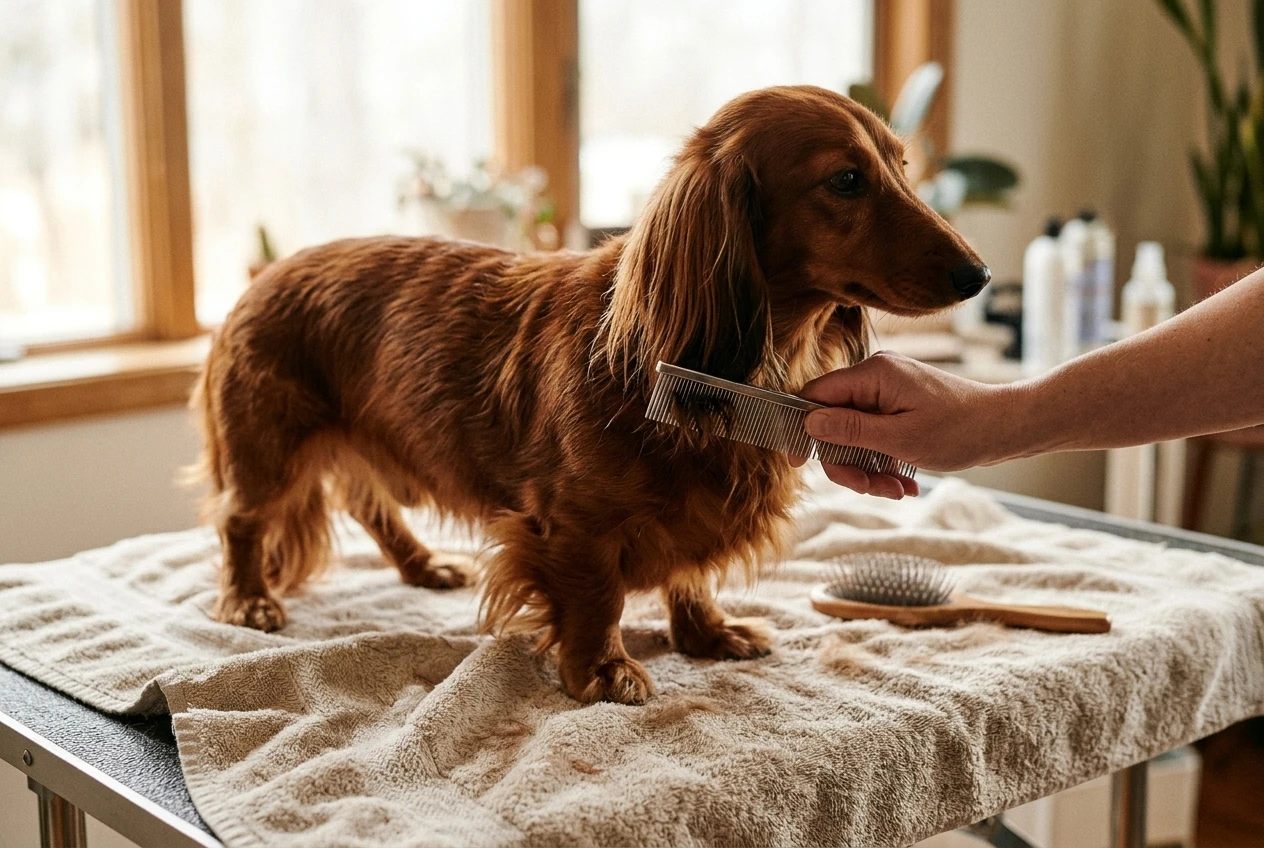
Longhaired coats. Brush two to three times a week, and check the feathering every day or two if the coat is thick. Work in sections with the pin brush, then run the comb through to confirm no tangles remain. The most common mats form behind the ears, under the collar, in the armpits and on the trousers at the back of the legs. Work a small mat apart with your fingers and the comb’s end teeth before brushing. Do not pull it straight through.
Wirehaired coats. A weekly pass with a slicker brush and comb keeps the coat clean and removes dead hair. Wirehaired coats are traditionally maintained by hand-stripping, which means plucking dead outer hair by hand a couple of times a year. Clipping softens the texture and changes the color over time. Many owners book a groomer who knows the breed for stripping and handle the weekly brushing and face tidying at home.
Bath time: how often, what to use and how to keep it calm
Most dachshunds do well with a bath every four to eight weeks, or sooner if they roll in something. Washing too often strips the natural oils and dries the skin, especially on smooth coats.
Put a rubber mat in the tub or sink so the dog’s feet grip, and fill it with a few inches of lukewarm water. Wet the coat from the neck back, lather with dog shampoo, and keep water and soap out of the ears and eyes. Rinse longer than seems necessary, because leftover shampoo irritates skin.
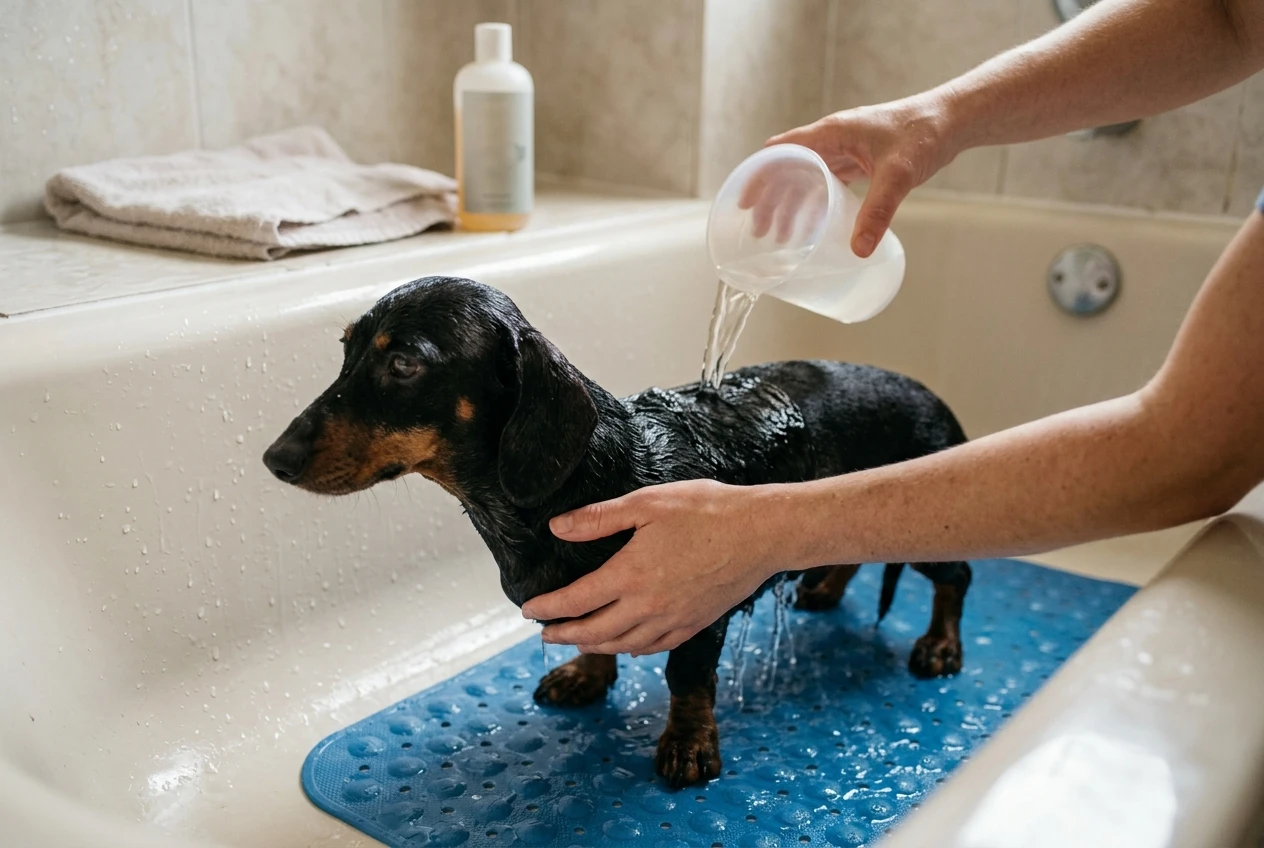
Towel dry thoroughly. Longhaired dogs need to be brushed while the coat is damp and again once it is dry, otherwise tangles set. Keep treats nearby and talk in a low, even voice. A dachshund that is lifted into the tub carefully, with one hand under the chest and one supporting the hindquarters, feels secure. Never let one leap out of the tub, since jumping down is hard on that long spine.
Trimming nails without a fight (and why short nails matter for a long-backed dog)
Long nails push the toes up and change how the foot meets the ground. On a dog built long and low, that affects posture and how the dog walks, and it adds to the strain on the legs and back. Our post on daily habits that reduce disc risk covers the wider picture. Short nails are one small part of it.
Trim every two to four weeks. If you hear nails clicking on a hard floor, they are due. Hold the paw firmly but gently, and clip a little at a time at a slight angle. On light nails you can see the pink quick inside. On dark nails, take off very small slivers and stop when you see a dark dot in the center of the cut end.
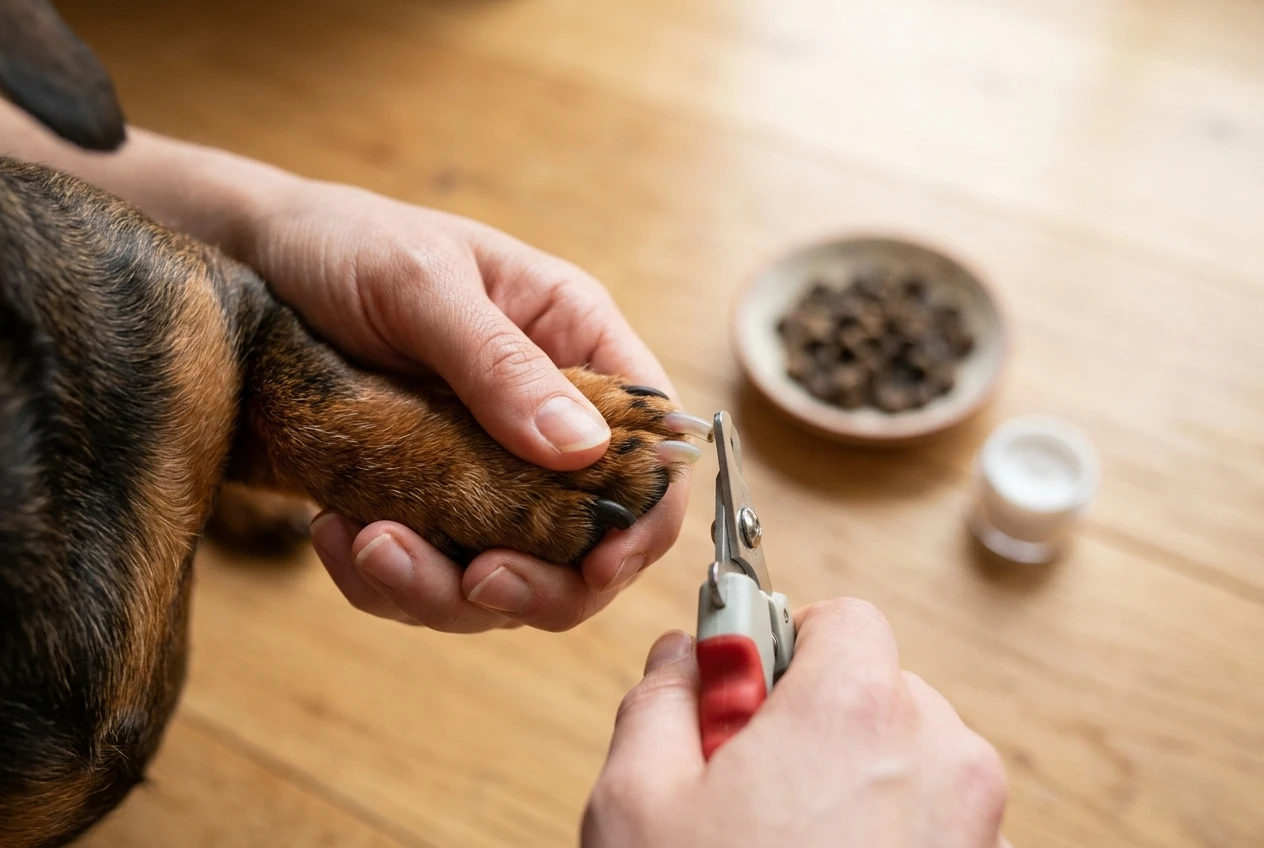
If you hit the quick, press styptic powder on the tip and stay calm. The dog will pick up on your reaction. A grinder works well for nervous dogs because it removes nail in tiny amounts, but the dog needs to be introduced to the sound first. Run it near the dog while giving treats before it ever touches a nail.
Ear cleaning and checking for trouble signs
Longhaired dachshunds in particular have ears that hang close to the head, which reduces airflow. Check the ears weekly for dirt, odor and redness.
To clean, squeeze a vet-approved ear cleaner into the canal, massage the base of the ear for a few seconds, then let the dog shake. Wipe the visible part of the ear with a cotton ball or gauze. Stop at the point you can see. Do not push anything deeper.
Contact your vet if you notice any of these:
- A strong or sour smell
- Dark, waxy or yellow discharge
- Redness or swelling inside the ear
- Frequent head shaking or scratching at one ear
- Pain when you touch the ear
Ear infections need diagnosis and treatment. Cleaning alone will not clear one.
Teeth, paws and the places owners forget
Small breeds are prone to dental disease, so teeth need regular attention. Brush with dog toothpaste daily if you can, and at least several times a week. Start by letting the dog lick the paste from your finger, then move to a finger brush, then a small toothbrush. Concentrate on the outer surfaces of the back teeth, where tartar builds up first.
Other places to check each week:
- Paw pads and between the toes: look for cuts, burrs and irritation. Trim long hair between the pads on longhaired dogs so it does not collect debris.
- Eyes: wipe away crust at the corners with a damp cloth.
- Skin under the tail, in the armpits and along the belly: look for redness, lumps or parasites.
- Anal glands: if the dog scoots along the floor, ask a vet or groomer to check. Do not squeeze them yourself unless a professional has shown you how.
Teaching a puppy to enjoy being handled
Grooming goes best when handling already feels normal. From the first weeks, touch the puppy’s paws, ears, mouth, tail and belly in short, calm sessions, and follow each one with a treat or a quiet cuddle. Keep sessions to a minute or two and stop while the puppy is still relaxed.
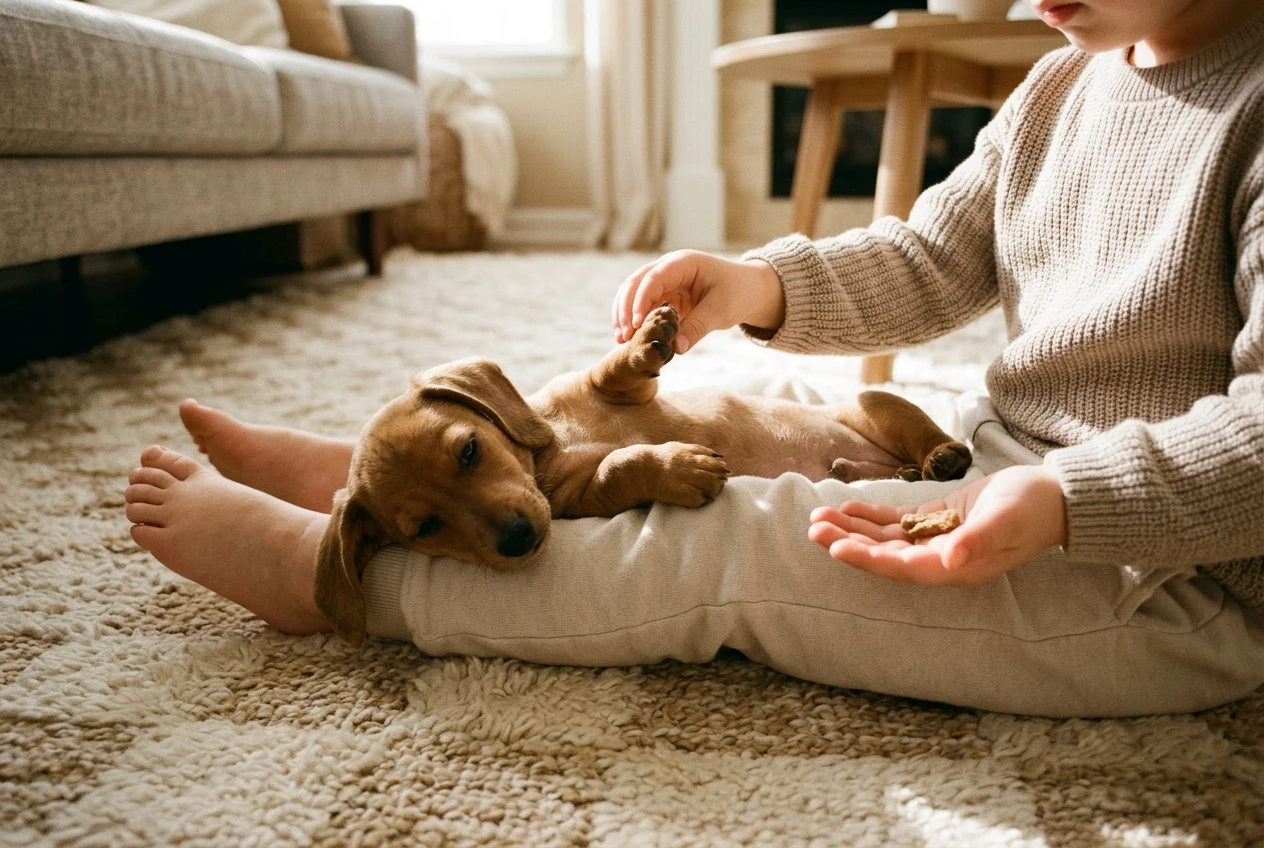
Introduce each tool on its own. Let the puppy sniff the brush, then stroke once, then reward. Do the same with clippers, touching the closed clippers to a toe without clipping. Do a pretend nail trim a few days before the first real one.
If you are bringing a puppy home, our first seven days at home guide shows where handling practice fits alongside feeding, sleeping and house training. Short, regular, happy sessions work better than one long one. A puppy that has been rewarded for being touched usually grows into an adult that stands still for the groomer and the vet.
A simple weekly and monthly grooming schedule
Daily
- Brush teeth if possible
- Quick check of longhaired feathering
Weekly
- Brush the coat (more often for longhaired dogs)
- Check and wipe ears
- Look over paws, eyes and skin
- Brush teeth if you do not do it daily
Every two to four weeks
- Trim or grind nails
- Tidy hair between the paw pads
Every four to eight weeks
- Bath, depending on activity and coat
Twice a year, or as your groomer advises
- Hand-strip a wirehaired coat
Once a year at least
- Veterinary exam, including teeth and ears
When to book a professional groomer or call the vet
A groomer is the right call for hand-stripping a wirehaired coat, for severe matting on a longhaired dog, and for nails if you or the dog cannot manage them yet. Ask whether the groomer has handled dachshunds before, and ask them to be careful lifting and positioning the dog so the back is supported.
Call the vet for ear infections, bad breath that does not improve with brushing, loose or broken teeth, bleeding gums, persistent scratching, hair loss, lumps, limping, and any sign of pain when you touch the back or neck. Back pain in a dachshund should always be treated as urgent.
If you’re thinking about welcoming a dachshund puppy into your home, take a look at our available litters and get in touch with us about joining the waiting list.