
Bringing a puppy home is exciting, and the first week with a dachshund puppy goes best when the days follow a simple order. A young dachshund needs sleep, a predictable potty routine, familiar food and protection for a long spine. Most of the rest can wait until the puppy has settled in.
This walkthrough goes day by day, from the car ride to the end of the first week. Puppies vary, so treat the days as a rough sequence and let your own puppy set the pace.
Before the car ride: one safe room, a crate and the basics
Set up before the puppy arrives, so that you are not shopping while a nervous eight-to-twelve-week-old watches you. Choose one room as the puppy’s base, ideally one with an easy-to-clean floor, close to the door you will use for potty trips. A kitchen or a hallway with a baby gate works well.
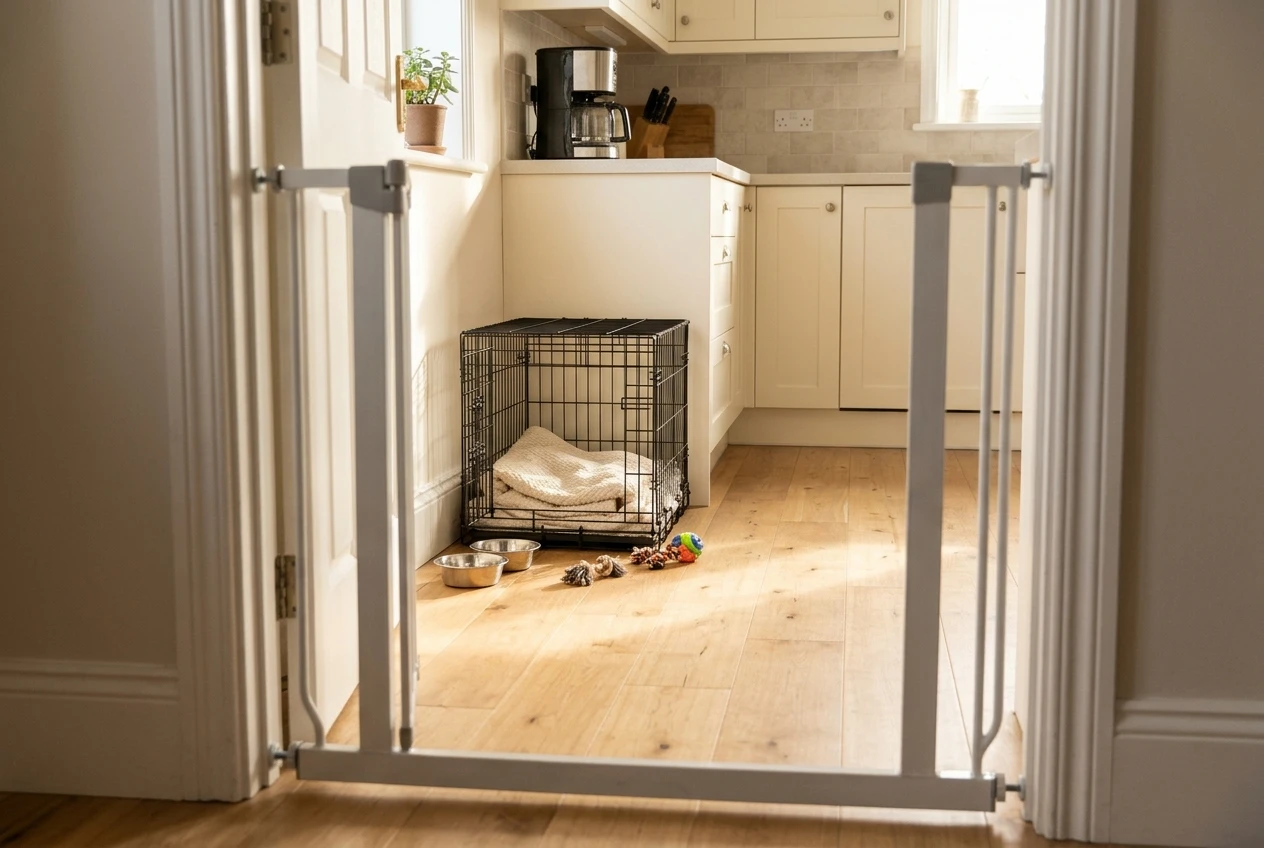
Gather these things:
- A crate big enough for the puppy to stand, turn around and lie down, but not much larger. Too much space makes toilet accidents more likely. Many families buy a crate with a divider so it can grow with the puppy.
- A small, soft bed or blanket that fits the crate.
- The same food the puppy has been eating, plus two shallow bowls, one for food and one for water.
- A collar or harness and a light leash. A harness is kinder on a dachshund’s long neck and back.
- Chew toys sized for a small mouth, and a few safe things to carry around and play with.
- Enzyme cleaner for accidents. Ordinary household cleaners can leave a smell that tells the puppy to go there again.
- A ramp or pet steps for any sofa or bed the puppy will be allowed on later.
Put away electrical cords, shoes and anything small enough to swallow. Dachshunds are curious and low to the ground, and they find things adults forget about.
Also plan who will be home. If you can arrange a few days where someone is around for most of the day, the first week becomes much easier.
Day 1: the ride home, the first potty break and a quiet first evening
Bring a second person if you can. One person drives and the other holds the puppy on a towel in their lap, or the puppy rides in a small crate or carrier that is secured in the car. Do not let a puppy roam loose in the car. Bring paper towels, a spare towel and a small bag in case of car sickness, which is common in young puppies.
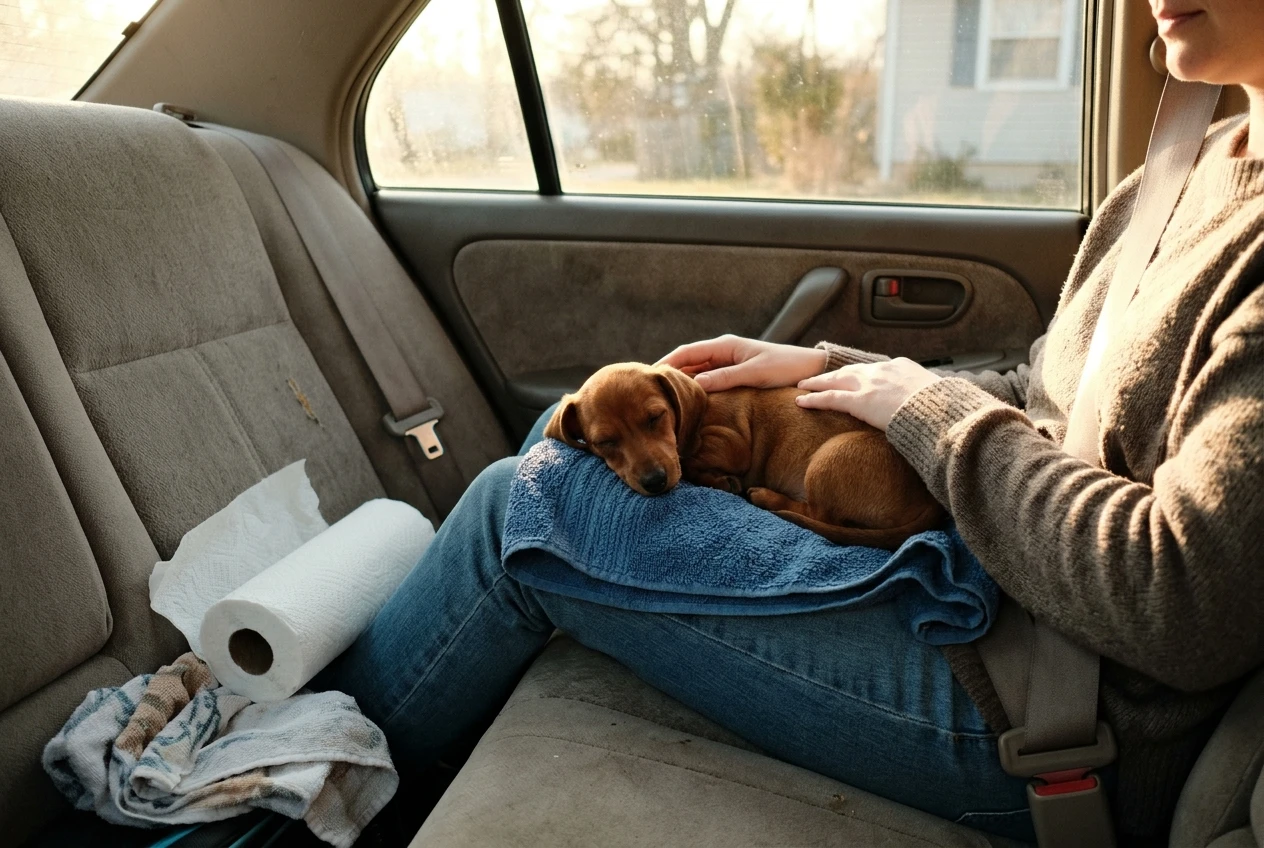
When you arrive, carry the puppy straight to the spot in your yard or street where you want potty trips to happen. Stand still, let the puppy sniff, and wait. When the puppy goes, say a calm word of praise and offer a small treat. This first success sets the pattern.
Then bring the puppy into the safe room. Let the puppy explore the room at its own speed. Resist the urge to introduce every family member, neighbor and cousin on day one. A puppy who has just left its mother and littermates is tired and unsure, and a calm room helps more than a party.
Some practical notes for the rest of the day:
- Offer a small meal at the usual time, using the food the puppy was already eating. Excitement can reduce appetite, so a puppy who eats a little is fine.
- Take the puppy out after every meal, after every nap and after every play session. In the early days that often means every hour or so while awake.
- Keep play short. Puppies tire quickly and then get cranky, and a sleepy puppy is a normal puppy.
- Handle the puppy gently, with one hand under the chest and the other supporting the hindquarters. Never lift a dachshund by the front legs or scoop it up with the back hanging down.
In the evening, keep things dull. Dim lights, quiet voices, a last potty trip, and then the crate.
Night 1 and 2: crate sleeping, crying and what actually helps
Your puppy has probably never slept alone before, so some crying is normal. Put the crate in your bedroom, or right outside the door, for the first few nights. Hearing and smelling you nearby often calms a puppy enough to sleep. You can move the crate gradually later if you want it elsewhere.
A few things help:
- Put a warm, snug blanket in the crate. Some owners tuck in a soft toy. Avoid anything the puppy could tear and swallow.
- Take water away about an hour before bedtime, and make the last potty trip just before you settle the puppy.
- Expect to get up once or twice in the night. A young puppy cannot hold its bladder until morning. Keep these trips quiet: no play, no talking, straight out and straight back in.
- If the puppy cries when you have already taken it out, wait for a short pause in the noise before you respond. Letting out a puppy in the middle of loud crying teaches that crying opens the door.
Puppies who cry hard and continuously for a long time may need a potty trip, or may simply be frightened. Check for either, then settle them again without fuss. Most puppies sleep better by the second or third night.
Never use the crate as punishment. It should be the puppy’s own bedroom, with a few treats tossed in during the day so that going in feels good.
Days 2 and 3: building a potty routine and a feeding rhythm
Now you can shape the routine. A puppy this age eats several small meals a day, and the number matters less than keeping it steady. If you got your puppy from a breeder, keep to the feeding schedule and food they used, and ask them if you are unsure. Switching foods suddenly commonly upsets a small stomach. If you want to change later, do it slowly over a week or more by mixing a little of the new food into the old. Our page on what we feed our dogs covers the thinking behind food choices.
Feed at the same times each day, leave the bowl down for about fifteen to twenty minutes, then pick it up. Regular meals produce regular toilet trips, which makes the potty routine far easier to predict.
A simple daily pattern looks like this:
- Wake up, go straight outside.
- Breakfast, then outside again.
- Short play, then outside.
- Nap in the crate or safe room.
- Repeat through the day, with a potty trip after each meal, nap and play.
- Last potty trip, then bed.
Go to the same spot each time, and stay with the puppy so you can praise the moment it finishes. Accidents will happen. Clean them with enzyme cleaner and do not scold. A puppy who is punished after the fact does not understand why, and may learn to hide when it needs to go.
Watch for the signs that a potty trip is due: circling, sniffing the floor, sudden wandering off, or whining at the door. Dachshunds can be stubborn about toilet training, and consistency is the whole method.
Day 4: introducing the rest of the house, stairs and furniture safely
By day four the puppy is usually a little braver. This is a good time to open up a second room, supervised, while keeping the safe room as the base.
This is also when back safety needs your full attention. Dachshunds have long spines and short legs, and repeated jumping or awkward landings put strain on their backs. Habits formed now will protect the dog for years.
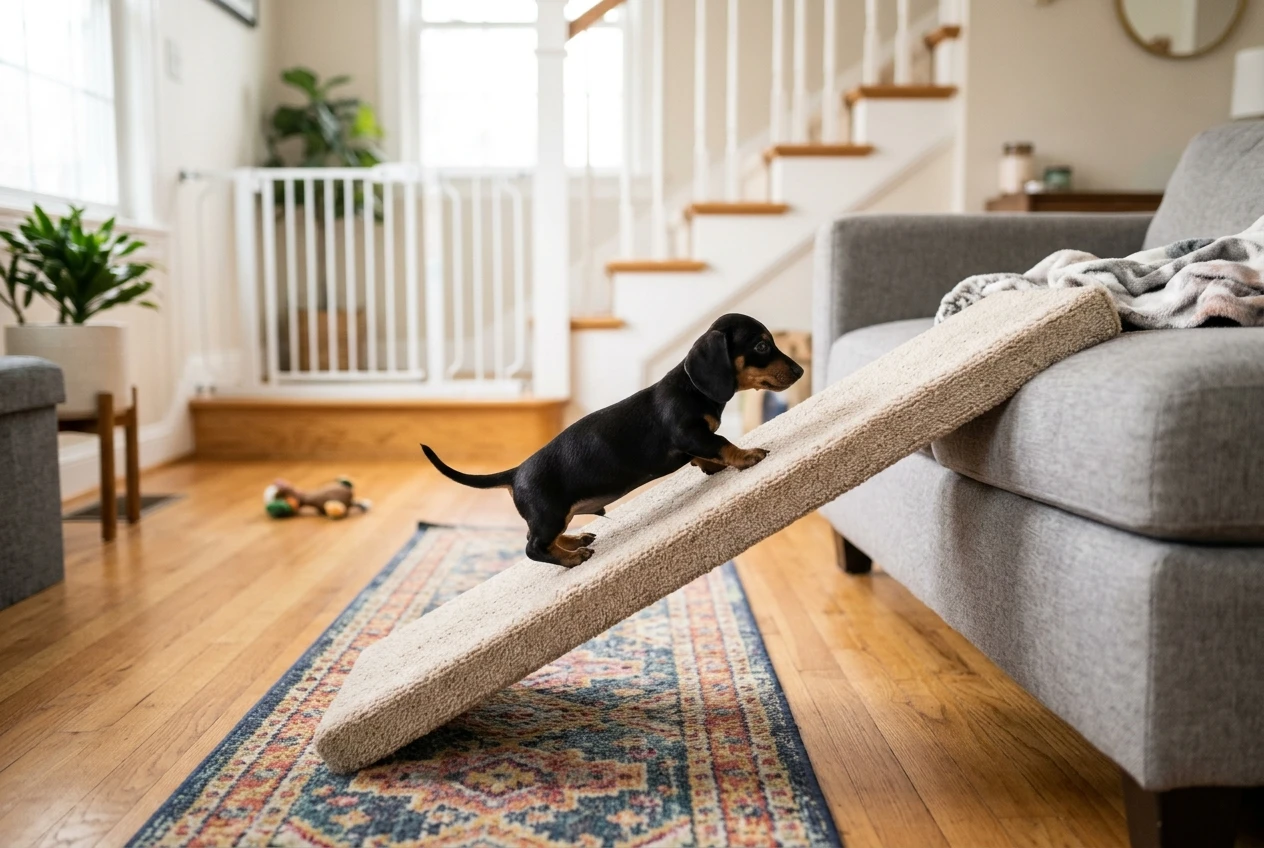
- Stairs: Block them with a gate. Carry the puppy up and down, supporting the chest and hindquarters, until you have decided on a longer-term plan with your vet.
- Furniture: Do not let the puppy jump on or off sofas and beds. Use a ramp or steps, or keep furniture off limits.
- Slippery floors: Hardwood and tile make small legs splay. Put down rugs or runner mats on the paths the puppy uses most.
- Play: Avoid games that make the puppy leap, twist or stand on its back legs. Keep roughhousing off the menu, especially with children.
- Weight: A lean puppy is easier on the spine. Measure meals rather than guessing, and keep treats small.
If you have children, show them how to sit on the floor and let the puppy come to them. Holding a puppy should happen sitting down, so a wriggle does not turn into a fall. For more general guidance, 10 tips for first-time dachshund puppy owners covers some of the same ground from another angle.
Days 5 and 6: gentle handling, short visitors and first car or vet trip planning
By now the puppy knows the rhythm of the house, so it is time to build some social confidence, gently.
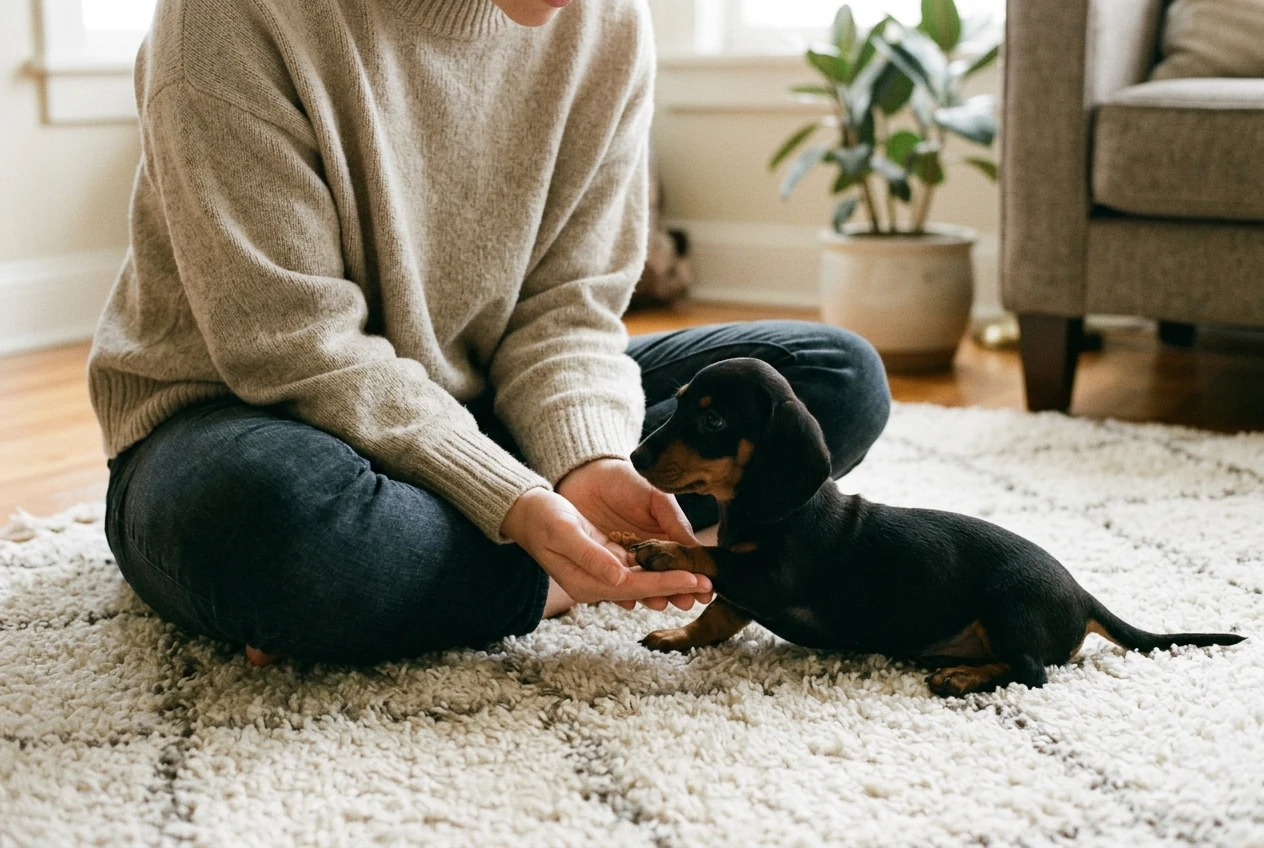
Practice handling for a minute or two each day. Touch the paws, look at the ears, lift the lips, and run a hand along the body, always followed by a treat. These small sessions make later nail trims and vet exams easier.
Invite one or two calm visitors for short visits. Ask them to sit down and let the puppy approach. Keep each visit brief and end it before the puppy is overtired. Avoid dog parks and places where unvaccinated dogs gather until your vet says the vaccine schedule allows it.
This is also the time to plan the first vet visit if you have not already booked it. Bring any health records from the breeder, and write down questions about food, vaccines, parasite prevention and back care. Ask the vet about the safest timing for socializing and for stairs.
For the car trip, bring a towel, paper towels and a carrier or a secured crate. Keep the first trip short, and if you can, make one or two very short practice drives first, ending somewhere pleasant. A puppy who only rides in the car to the vet will start to dislike it.
Day 7: what a settled week looks like and when to call your breeder or vet
By the end of the first week, most puppies have a recognizable routine. You may see:
- Eating at regular times with a good appetite
- Fewer accidents, with the puppy sometimes heading to the door itself
- Longer stretches of sleep at night, even if you still get up once
- More confident play and interest in toys
- A puppy who greets you, then settles in the safe room
Not every puppy will tick every box, and accidents continue for weeks. Progress is uneven, and a good day followed by a bad one is normal.
Contact your breeder for questions about food, routine, sleep and behavior. They know the puppy’s background and are usually glad to hear how it is going. Our article 10 things your dachshund breeder wants you to know explains why we like to stay in touch.
Call your vet promptly if you see any of the following:
- Refusing food for a day, or repeated vomiting or diarrhea
- Unusual tiredness, weakness or shakiness, especially in a small puppy
- Coughing, labored breathing, or discharge from the eyes or nose
- Straining to pass urine or stool, or no toilet trips at all
Back problems need quick attention. If your puppy yelps when picked up, hunches, seems reluctant to move, drags a back leg, or wobbles, see a vet the same day. Early treatment makes a significant difference to the outcome.
The first week asks a lot of both of you, and it gets easier. Keep the days simple, protect that long back, and let your puppy learn that your home is a safe place.
If you have questions about your puppy’s first week, or you are still looking for the right dachshund puppy, get in touch with us through our site and we will happily talk it through with you.