
Dachshunds have a reputation for being funny, loyal and difficult, and all three are accurate. The breed’s temperament comes from a specific job, and once you understand that job, most of the behavior that surprises new owners starts to make sense. This article describes what daily life with the breed looks like so you can decide whether it suits your household. No breeder can promise the personality of one particular puppy, and this article doesn’t try to.
Bred to hunt badgers: where the dachshund personality comes from
The name is German for “badger dog.” Dachshunds were developed to follow a scent, go underground into a burrow, and confront an animal that could fight back. That work needed a dog that would act on its own judgment, far from its handler, with nobody to give instructions once it was in the tunnel.
Each trait that frustrates owners today matches a need of that job. A dog that waits for approval before every decision would have been useless underground. A quiet dog could not tell hunters where it was. A dog that lost interest after a few minutes of digging would never have reached the badger. The long body, short legs, big chest and surprisingly deep bark were all selected for burrow work.
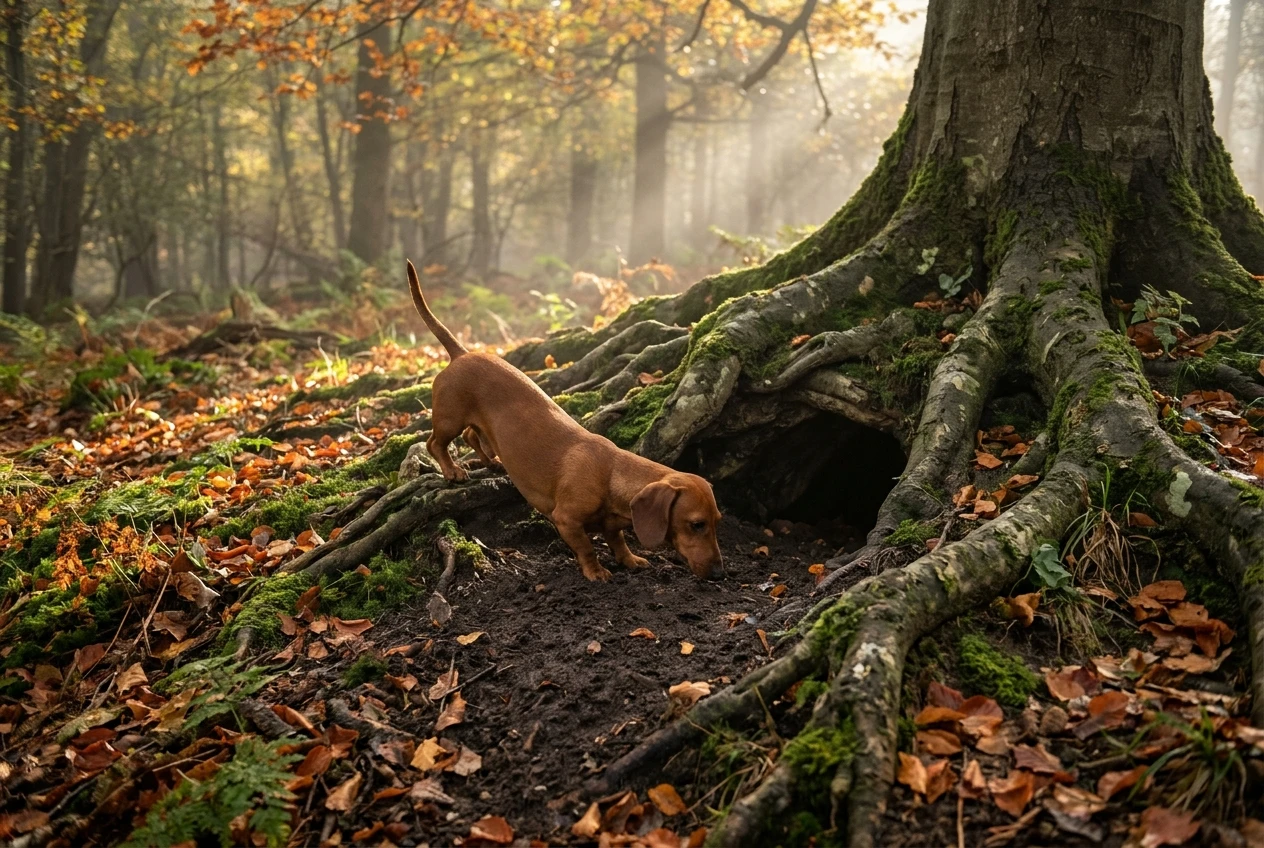
Plenty of dachshunds today have never seen a badger, but the instincts are inherited. They show up in the living room as a dog with strong opinions, a loud voice and a nose that overrides most other things.
The stubborn streak: what it looks like at home and how to work with it
Stubbornness in a dachshund rarely looks like defiance. It looks like a dog that heard you, understood you and is weighing whether your request is worth it. You call from the back door and the dog keeps sniffing the same square foot of lawn. You ask for a sit and get a long look.

Dachshunds are intelligent, which is part of the problem. They learn quickly, including the things you did not mean to teach. If whining at the table has worked twice, it is now a policy.
A few approaches hold up well with the breed:
- Use food and play as pay. Praise alone is often not enough for a scent hound. Small, tasty rewards give the dog a reason to cooperate.
- Keep sessions short. Five focused minutes, a few times a day, beat one long session that ends with a bored dog and an irritated owner.
- Be consistent across the household. If one person allows the sofa and another does not, the dog will pick the more permissive person every time.
- Skip harsh corrections. Dachshunds tend to shut down or dig in when pushed. Calm repetition works better than escalation.
House training deserves a special mention. Many owners find dachshunds slower to housebreak than other small breeds, and a dog that dislikes cold, wet grass will argue about going outside in winter. A fixed schedule, a covered or sheltered potty spot and generous rewards for going in the right place make a real difference. The same patience applies to crate training and leash manners.
Barking, digging and chasing: the hound behaviors that surprise new owners
Dachshunds bark more than most people expect from a dog their size, and the bark is deeper than you would guess. They alert to the doorbell, the mail carrier, a squirrel, a leaf and a noise that only the dog heard. If you live in an apartment with thin walls or close neighbors, take this seriously before you buy.
Barking can be managed but rarely eliminated. Teaching a “quiet” cue, reducing the dog’s view of the street, and making sure it gets enough exercise and mental work all help. A bored dachshund barks more.
Digging is the second surprise. A dog bred to tunnel will dig in gardens, in couch cushions and in blankets. Some dachshunds burrow under covers at night, which many owners find endearing. If you have a garden you care about, plan on fencing off beds or giving the dog a designated digging spot.
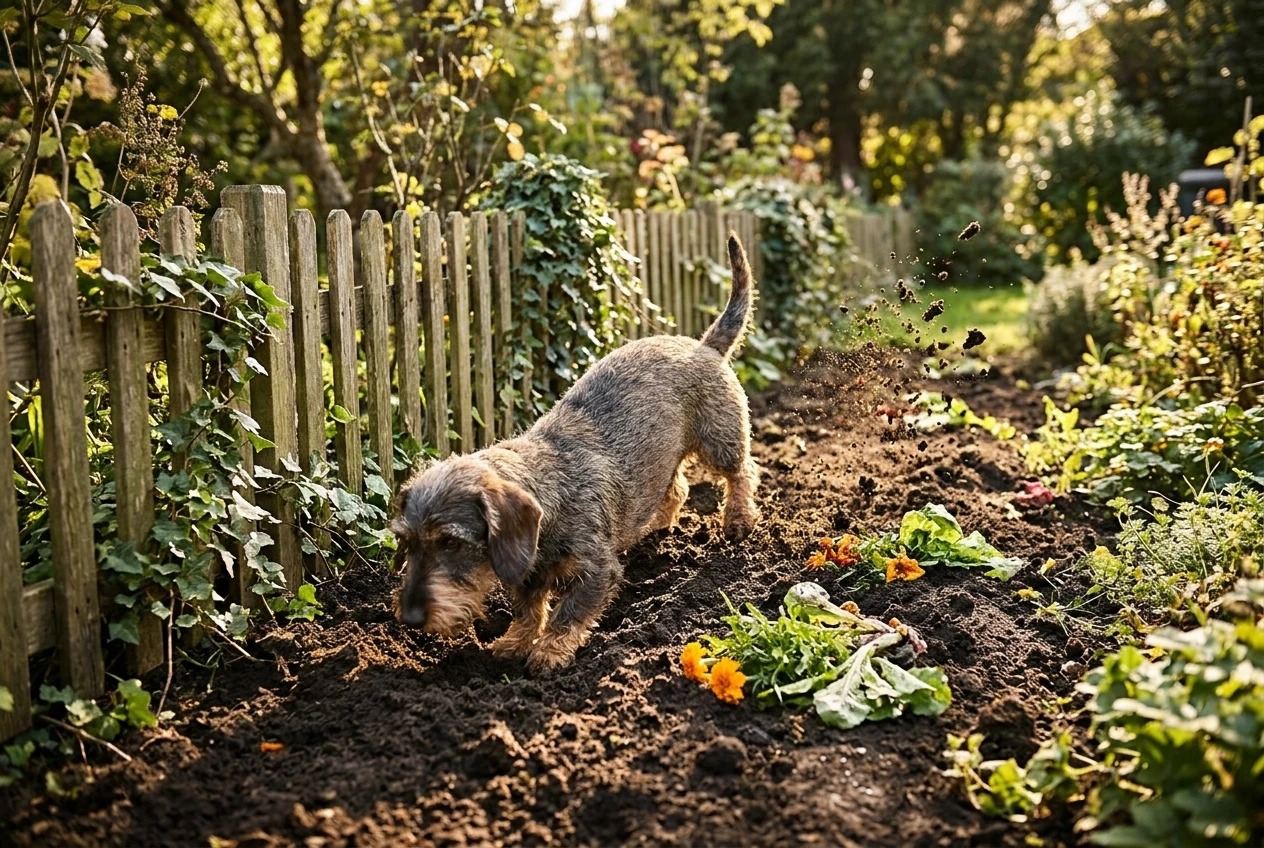
Then there is chasing. The nose leads and the brain follows. A dachshund that catches a scent may ignore your recall entirely, and a small animal running across a yard can trigger a sprint. For safety, most dachshunds should be on a leash or in a securely fenced area. Fences should be checked at ground level, since a determined dachshund will find a gap or dig under.
One physical point affects behavior and owner choices alike: the long spine. Dachshunds are prone to back problems, so repeated jumping off furniture and climbing steep stairs are best limited. Ramps, steps and lifting the dog with support under the chest and hindquarters are common precautions. A dog that loves to leap off the sofa needs an owner who sets up the home to prevent it.
Velcro dogs: affection, attachment and why many dachshunds struggle alone
Dachshunds bond closely with their people, and many follow one person from room to room. They sit on laps, burrow into blankets next to you and sleep against your legs. For some households this is the best thing about the breed.
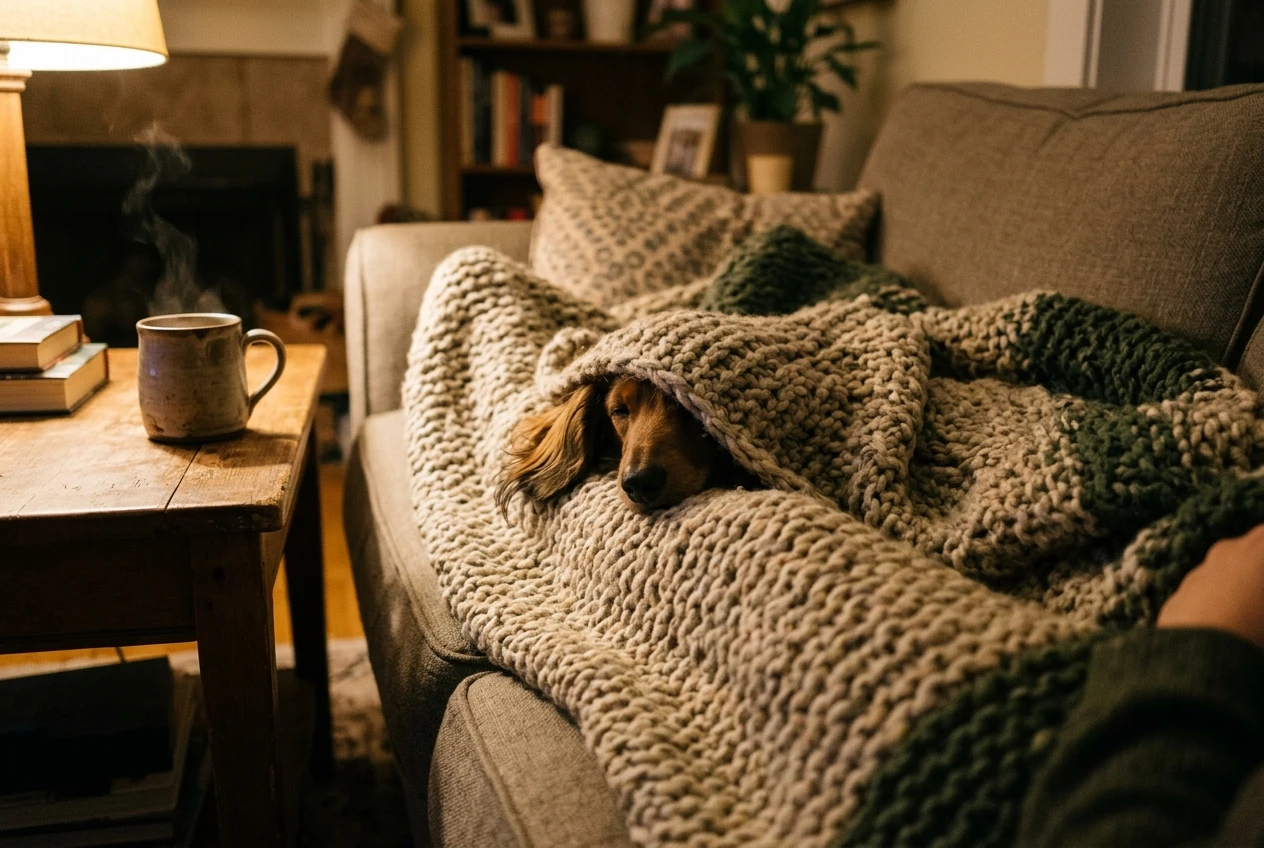
The flip side is that many dachshunds do poorly when left alone for long stretches. A dog bred to work in partnership with hunters may react to isolation with barking, chewing, house soiling or general distress. Owners who work long hours away from home should think hard about this before bringing a puppy home.
If you are away during the day, there are workable options: a midday visitor or dog walker, a household where someone is usually home, or a second dog for company, though a second dog does not suit every household or every dog. Gradual alone-time training from the first weeks helps a puppy learn that being left is temporary. Our guide to the first week with a dachshund puppy covers how to begin that routine from day one.
Dachshunds with kids, cats and other dogs: what to expect and what to supervise
Children. Many dachshunds do well with respectful, gentle children. The breed is sturdy in spirit but fragile in the back, and a dog that is picked up wrongly, dropped or ridden like a pony can be badly hurt. Very young children should not carry a dachshund, and all interactions with small kids need an adult nearby. Teach children to sit on the floor and let the dog come to them. A dachshund that feels cornered or handled roughly may snap, and that is a human supervision problem more than a dog problem.
Cats. This varies a lot. A dachshund raised with a cat from puppyhood often coexists with it peacefully. Introducing an adult dachshund to an unfamiliar cat is a different matter, because the chase instinct can be strong. Gradual introductions, barriers at first and plenty of escape routes for the cat are sensible steps.
Other dogs. Dachshunds frequently get along with other dogs, and many enjoy the company. Some, however, are unaware of how small they are and pick fights with much larger dogs. Supervise early meetings, and be careful at dog parks where rough play with big dogs can injure a dachshund’s spine.
Small pets. Rabbits, hamsters, guinea pigs and birds are prey to a hunting breed. Keep them in secure enclosures that the dog cannot reach, and do not leave them together unsupervised.
Do size and coat change temperament? What breeders actually see within a litter
Dachshunds come in two sizes and three coats: smooth, wirehaired and longhaired. People often ask whether the variety predicts the personality.
Size. In the United States, the American Kennel Club lists miniatures at 11 pounds or less at a year old, with standards typically between 16 and 32 pounds. The two sizes share the same instincts. Standards tend to feel a little more sturdy and are sometimes described as steadier, while miniatures are often seen as more fragile in handling and, in some homes, more prone to being excitable or vocal. These are tendencies, and plenty of dogs break them. If you are weighing sizes, our guide to what a miniature dachshund is explains what to consider.
Coat. Common generalizations include smooth coats as the classic outgoing, bold type, wirehaired dachshunds as more clownish and terrier-like, and longhaired dachshunds as somewhat gentler and calmer. There is some basis for these in the different breeds used to create each coat type. Still, breeders regularly see a quiet wirehair and a rowdy longhair. Coat tells you about grooming needs more reliably than it tells you about personality.
Within a litter. The most useful lesson is that puppies from the same litter, with the same parents and the same upbringing, can differ noticeably. One may be bold and first to the food bowl, another watchful, another a cuddler who falls asleep on the nearest person. Genetics, early handling, socialization and the dog’s own nature all contribute, and no one can predict how any of these will combine in an adult. A reputable breeder will describe each puppy honestly and will not promise outcomes.

Breeding choices matter too. Temperament is partly inherited, so the dispositions of the parents are worth asking about. Our article on ethical dachshund breeding looks at why this is part of responsible breeding.
Is a dachshund right for your household? Honest signs it is, and signs it isn’t
A dachshund is likely to suit you if:
- Someone is home for much of the day, or you can arrange reliable company for the dog.
- You find a dog with opinions entertaining and can stay patient through training.
- Your home can accommodate ramps or steps and limits on jumping and stairs.
- You want a close companion that follows you around and sleeps near you.
- Your neighbors can tolerate some barking, or you live with enough space that it will not cause conflict.
A dachshund may be a poor match if:
- The household is empty for ten hours a day, five days a week.
- You expect a dog that obeys instantly and reliably off leash.
- You want a quiet dog, or you live somewhere that cannot tolerate barking.
- You have a precious garden and no plan to protect it.
- Very small children will have unsupervised access to the dog.
- You want to guarantee a particular personality in advance.
If the second list describes your situation, that is useful information, and it is better to learn it now than after the puppy arrives. Other breeds or an older dog with a known temperament may be a better fit.
How to read a puppy’s temperament before you bring one home
Temperament cannot be known for certain at eight weeks, but you can learn a good deal by watching and asking questions.
Watch how the puppy behaves in a few settings. Does it approach people with curiosity, hang back, or hide? How does it react to a sudden sound, like a dropped spoon? Is it comfortable being gently held, and does it recover quickly after being startled? A puppy that is neither frantic nor frozen is usually coping well.
Ask the breeder:
- How the puppies have been handled and socialized so far.
- What the parents are like, and whether you can meet at least the mother.
- What each puppy’s personality has looked like so far, and which puppy might suit your household.
- What kind of home the breeder thinks each puppy would do well in.
Be open about your own life. Tell the breeder who lives at home, how long the dog would be alone and what your experience is. A good breeder uses that to guide you toward a puppy that matches, which may mean recommending a different puppy from the one you fell for in the photos, or telling you to wait for a later litter.
Ready to take the next step?
If a dachshund sounds like a good fit for your home, the breeder’s puppy availability page lists current and upcoming litters. You are also welcome to get in touch with questions about the puppies, the parents or whether a particular dog would suit your household.
If you are getting ready for a puppy, the first-time dachshund owner guide walks through what to prepare before the puppy comes home.