
Choosing a Dachshund puppy starts with choosing the person who raised it. The breeder decides how the parents were chosen, how the puppies were handled in their first weeks, and whether anyone will answer your questions after you bring your puppy home. If you are working out how to find a reputable Dachshund breeder, the most useful thing you can do is learn what to look for before you fall in love with a photo.
This guide is a vetting checklist you can use on a first phone call or a visit. For each topic it covers what to ask, what a good answer sounds like, and which answers mean you should thank them for their time and keep looking. For the bigger picture of why breeding practices matter, our explainer on what ethical Dachshund breeding is covers it. This article is about what you do and say during the search.
Start With the Breeder, Not the Puppy
Before you call anyone, spend twenty minutes reading their website, social pages and ads. You can learn a lot about a breeder before you ever speak to them.
A good breeder’s page usually tells you who they are, where they are, and which Dachshund varieties they work with (smooth, longhaired, wirehaired, miniature or standard). It shows the actual parent dogs, by name, and explains what a family should expect from the process: how to inquire, whether there is a waitlist, and what the contract covers.
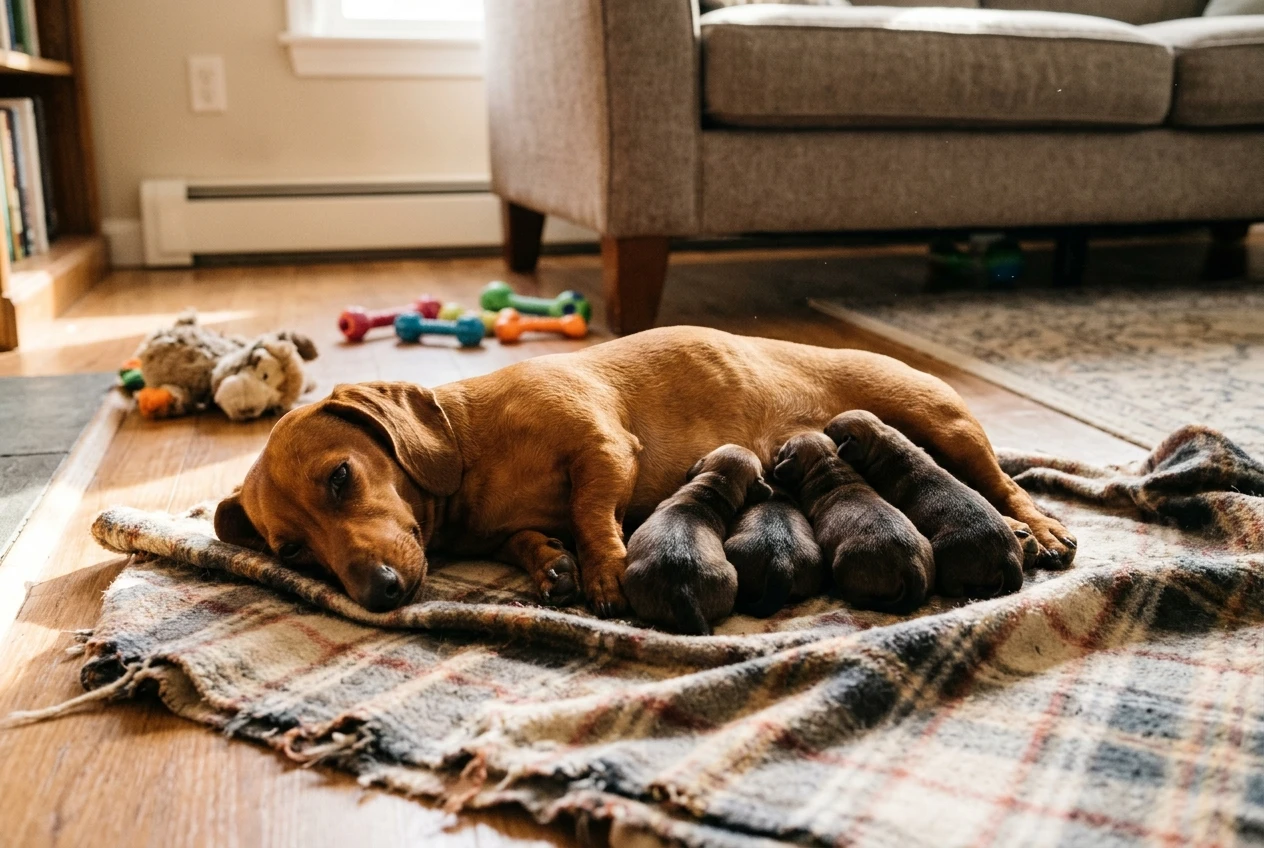
Look for these signs:
- Photos of real dogs in a real home. Puppies on a lawn or kitchen floor that you can see belong to the same household, and photos of the mother with her litter.
- Named parents. If you cannot tell which dogs the puppies come from, you cannot ask about their health or temperament.
- Plain language about health. Specific mentions of the testing done on the parents are better than the words “vet checked” or “healthy.”
- A way to contact them that is more than a text number. A phone number, an email and a general location are normal.
A few things on a page should slow you down. Stock-style photos, or photos with watermarks from other sites, may belong to someone else. You can run a picture through a reverse image search; if it turns up on several unrelated sites, treat the ad as a scam. Many different breeds listed for sale at once, prices listed with a “buy now” button, and a puppy shown against a plain background with no sign of where it lives should also make you cautious.
Red Flags That Should Make You Walk Away
Some warning signs are serious enough that you should stop the conversation, however cute the puppies are.
Puppies are always available
A breeder who has puppies ready every week of the year is likely running a volume operation. A Dachshund mother needs time to recover between litters, and a careful breeder plans litters around the dogs, not around a sales calendar. A breeder who lists several litters at once, or has puppies available on demand for any color you request, is selling a product.
No visits, no video calls
A breeder who will not show you where the puppies are raised is hiding something. Some breeders limit in-person visits for a legitimate reason: young puppies have not finished their vaccines, and visitors can carry germs in from other dogs. A responsible breeder who limits visits will still offer a live video call, show you the mother and the space, and invite you to meet the puppies once it is safe. A breeder who offers to meet you in a parking lot, deliver the puppy to a gas station, or ship the puppy sight unseen is a serious concern.
Pressure to pay quickly
Be suspicious of “three other families are looking at this puppy, so send the money today.” Urgency is how scammers and brokers get you to decide before you think. Payment methods matter too. Requests for gift cards, wire transfers or payment apps with no buyer protection are common in puppy scams. A genuine breeder gives you time to read the contract and ask questions.
Other warning signs
- They will not name the parents or share their registration information.
- They cannot say how old the puppies are or when they will be ready to go home. Puppies should stay with their mother and littermates until at least eight weeks old.
- They dismiss health questions with “my dogs have never had a problem.”
- They offer to sell you two puppies together at a discount, or push you to take a puppy you did not choose.
- They have no contract or will not let you read it ahead of time.
- The place smells strongly of urine, the dogs are dirty, or they keep the adult dogs hidden.
- They sell through pet stores or a third party and cannot tell you where the puppies came from. A broker is a middleman who has often never seen where the puppy was born.
Green Lights Worth Looking For
Good breeders tend to look slower and more selective than you expect, and that is a good sign.
A waitlist. A waitlist usually means the breeder plans litters in advance and matches puppies with families instead of selling to the first buyer. Ask how long the wait usually is and how the order works. Waiting a few months for the right puppy is normal.
Questions for you. A breeder who cares where the puppy goes will ask about your home, your schedule, your children, your other pets and your experience with dogs. They may ask if you have stairs or furniture the puppy will jump on, since Dachshunds are prone to back injuries. They may ask who will be home during the day. If you are the only one asking questions, the breeder cares more about the sale than the puppy.
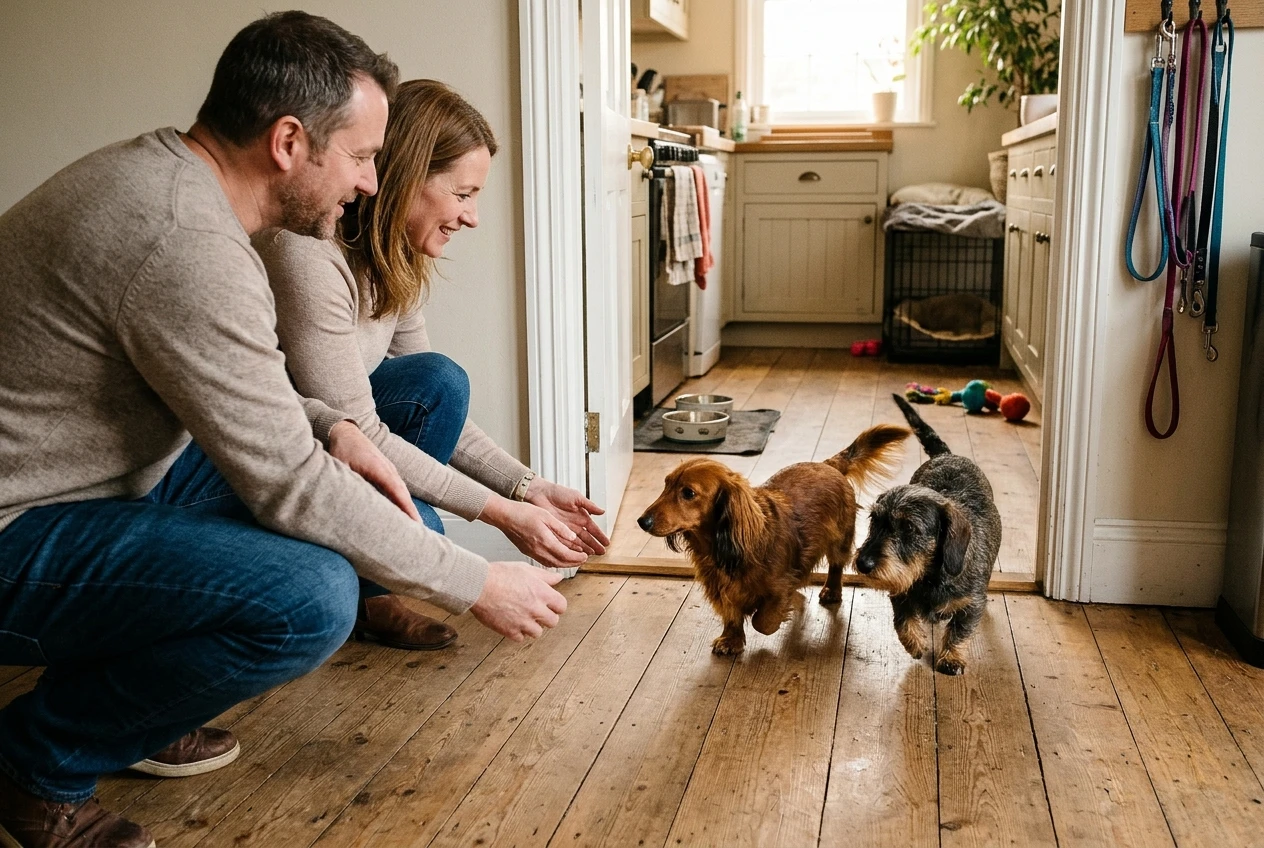
A home you can see. The best sign is a breeder who invites you to see the dogs where they live, either in person or by video. Dogs that live in the household, wander in and out of the kitchen, and greet visitors are usually well socialized.
Honest answers about downsides. A reputable breeder will tell you that Dachshunds bark, dig, resist house training and can be stubborn. They will also talk about back health without changing the subject. If you want a realistic picture yourself, our piece on what living with a Dachshund is really like is a useful read before you call.
Willingness to say no. A breeder who tells you a puppy might not be the right match, or that your home is not ready, is putting the dog first.
Questions to Ask on the First Call
Keep this conversation friendly. You are not interrogating anyone; you are getting to know the person who will be a resource for your puppy’s whole life. Here are questions to ask, with what a good answer sounds like.
“Can you tell me about the parents?” A good answer names the sire and dam, describes their temperament and size, and mentions their ages and health history. The breeder should be happy to talk about them at length.
“How many litters do you have each year, and how many breeds do you work with?” A good answer is a small number, with one or two breeds or varieties. Several breeds and many litters point to a commercial operation.
“How old is the mother, and how many litters has she had?” A good answer shows the mother is a healthy adult with time between litters. Be wary of a very young mother, a mother with many back-to-back litters, or a vague answer.
“What health testing have the parents had?” A good answer names specific tests and can show you the results. More on this in the next section.
“How are the puppies raised?” A good answer describes puppies raised in the house, handled daily from birth, and gradually introduced to household noises, other people and different floor surfaces.
“When can the puppies go home, and what will they have had by then?” A good answer is eight weeks or older, with a vet exam, first vaccines, deworming and often a microchip, all documented in writing.
“What do you feed the puppies, and what will you send home with us?” A good answer names the food so you can keep it consistent in the first days, and may include a blanket or toy that smells like home. Our breeder’s page on what we feed our dogs is an example of the kind of detail you can ask for.
“What happens if we can’t keep the puppy?” A good answer is a clear take-back policy. The breeder should want the dog returned to them instead of ending up in a shelter or with a stranger.
“Can I talk to someone who has one of your puppies?” A good answer is yes, with references from families or a vet. A breeder who has raised puppies with care usually has people happy to talk.
Health Testing and Vet Records
This is the area where the fewest buyers ask and where answers matter most. Dachshunds are prone to certain conditions, most famously intervertebral disc disease (IVDD), a back problem. Breeders cannot eliminate that risk, but they can work to reduce it through careful choices of parents, and they can help you protect the dog’s back at home. Our guide to protecting your Dachshund’s back covers daily habits that help.
What to ask to see for the parents
Ask which health tests have been done on both parents and ask to see the actual results, not just hear that they were done. Which tests are relevant depends on the coat type and variety, so ask the breeder to explain why they chose each one. Things worth asking about include:
- Genetic tests for inherited conditions that affect Dachshunds. Depending on the variety, these can include eye conditions such as cord1 PRA, and Lafora disease in miniature wirehaired Dachshunds. There are also genetic tests related to back problems. Ask your breeder and your vet what each test means.
- Eye exams by a veterinary eye specialist.
- Knee (patella) checks and general orthopedic exams by a vet.
- Results in a public database, when available. The Orthopedic Foundation for Animals (OFA) keeps a searchable public database of results that you can check yourself.
If you are looking at a dapple, ask the breeder how they avoid breeding two dapples together. Puppies that inherit the dapple gene from both parents (double dapples) are at higher risk of hearing and vision problems, and responsible breeders pair a dapple with a non-dapple.
What to ask to see for the puppies
- A vet exam record with the date, the vet’s name and findings.
- Vaccination and deworming dates, and what the next vaccines will be.
- Microchip details, if the puppy has one, and how registration transfers to you.
- Registration paperwork, and whether the puppy is registered with a recognized registry such as the AKC. Registration alone does not prove quality, but the papers should match the parents you were told about.
A good breeder is relaxed about these requests and will tell you what they know and do not know. A breeder who becomes defensive, or says “I do not believe in all that testing,” is giving you an answer.
What a Visit Should Look Like
If you can visit in person, treat it as a chance to observe. If the breeder limits visitors to protect young puppies, expect to meet them in a controlled way, such as outside, or to see the puppies by video first. Either way, here is what to look at.
The dogs. Adult dogs should look healthy: clear eyes, clean ears, a good body weight and a shiny coat. They should be friendly or at least calm around strangers, not terrified or frantically barking. Dachshunds are vocal, so some barking is normal, but trembling or hiding is not.
The space. The area where puppies live should be clean, dry and warm, with room to play and clean bedding. The puppies should have toys and be around the household. A kennel at the back of the property with no human contact is a different thing from a puppy pen in the family room.
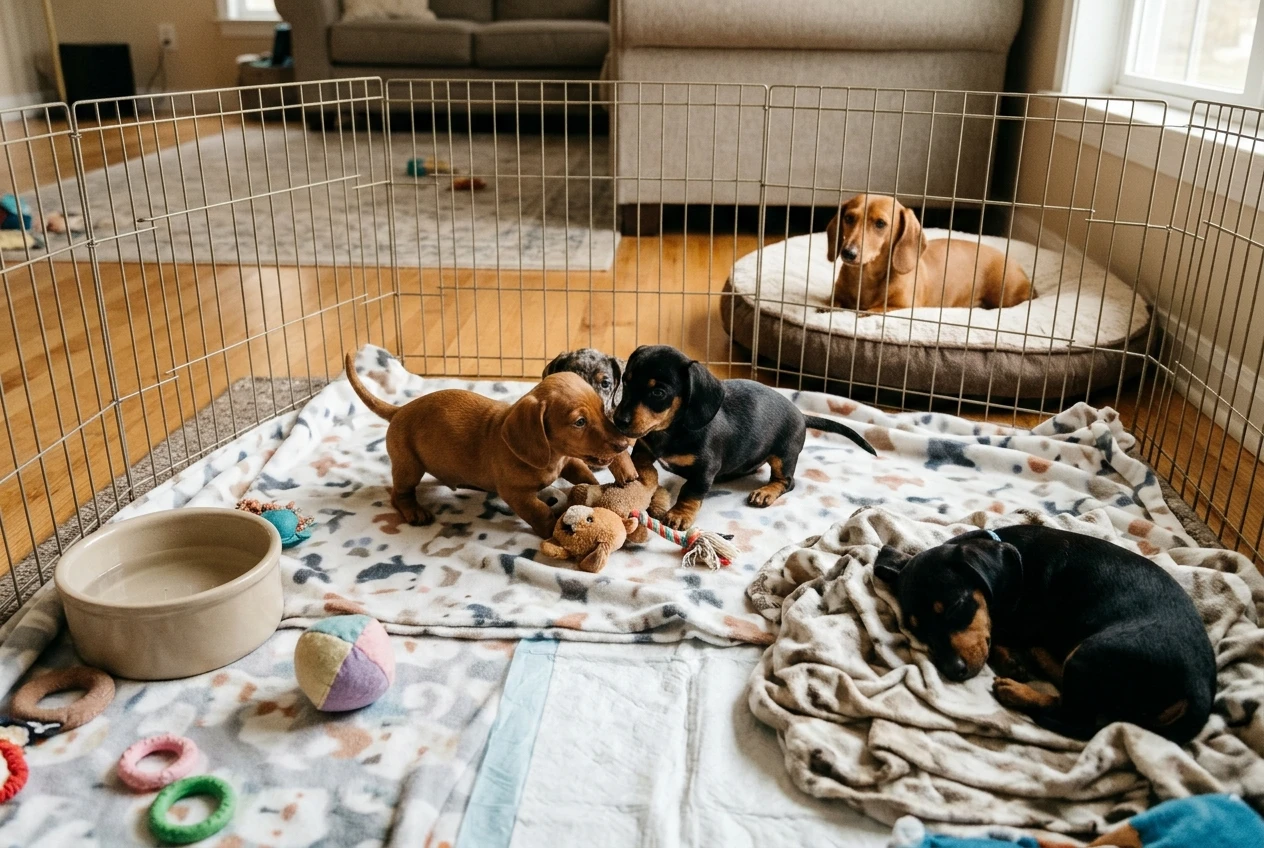
The mother. Ask to meet the mother. She should be present, relaxed, in good condition and comfortable with her puppies. A mother who looks thin, exhausted or nervous is a concern. If the breeder says she is “away” or cannot be seen, ask why. The father may live elsewhere, particularly if the breeder used an outside stud, but the breeder should be able to tell you about him and show you photos and records.
The puppies. Healthy puppies are curious, plump without a swollen belly, and have clean eyes, ears and noses. They should have no crusty discharge or bald patches. At eight weeks, they should come toward you, play and then sleep deeply. A puppy that is listless, coughing or hiding in a corner needs a vet before it needs a new home.
The breeder’s behavior. Notice whether the breeder answers questions patiently, lets you handle the puppies gently, and encourages you to take your time.
Paperwork, Deposits and Support After You Go Home
A breeder’s paperwork shows how seriously they take their commitment to the puppy and to you.
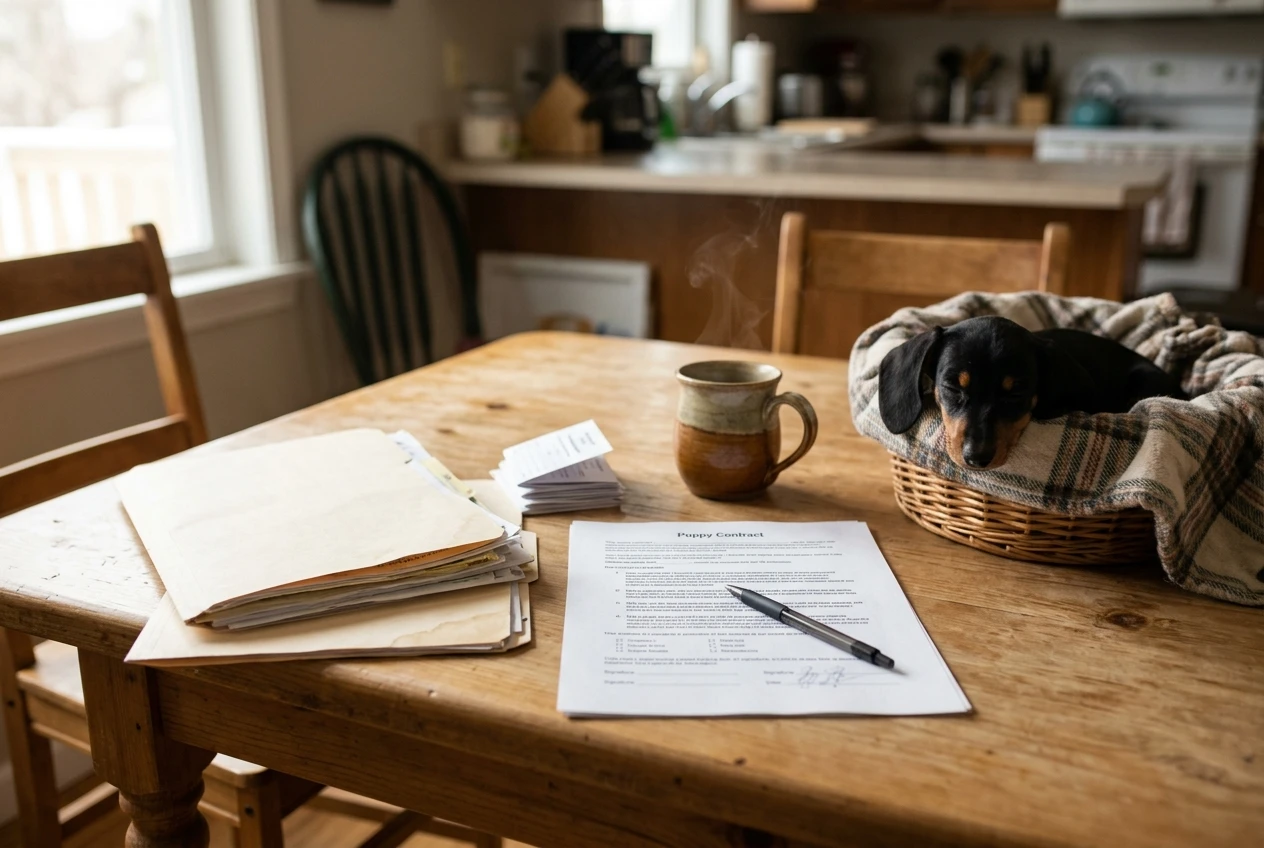
The contract
Ask to read the contract before you pay anything. A good contract states the puppy’s details, the price, what is included, the health guarantee and its limits, spay/neuter or breeding terms, and what happens if you cannot keep the dog. Read it carefully, ask what any unclear terms mean, and be wary of a breeder who will not let you take it home to think.
The take-back policy
A responsible breeder will take back a puppy or dog at any point in its life if you cannot keep it. Look for that promise in writing. It tells you the breeder considers the dog their responsibility for life.
Deposits
A deposit is normal and reserves your place on the waitlist or a puppy from a litter. Before you pay, get answers in writing to these questions:
- What is the deposit amount and what does it go toward?
- Is it refundable, and under what conditions? For example, what happens if the litter is smaller than expected or no puppy matches your preferences?
- How do I pay, and will I receive a receipt?
Pay by a method that leaves a record, and avoid gift cards and wire transfers.
Support after you bring the puppy home
The first days are when most families have questions: feeding, sleeping, crate training and the first vet visit. Ask whether the breeder is available for questions after the sale and how to reach them. Our walkthrough of your Dachshund puppy’s first seven days at home can help you plan, and a good breeder will gladly answer what comes up.
A One-Page Checklist to Screenshot
Save this to your phone and bring it to your first call or visit.
Before you call
- Website or ad shows real dogs, named parents and a real location
- Photos are not stock or copied from elsewhere
- Breeder works with a small number of varieties
Walk away if
- Puppies are always available, or many litters at once
- No visit or video call is offered, or they want to meet in a parking lot
- You are pressured to pay quickly, or asked for gift cards or wire transfers
- No named parents, no health testing, no contract
- Puppies leave before eight weeks
- The mother is hidden, or the dogs and space look dirty or neglected
Green lights
- A waitlist and a clear process
- The breeder asks you questions about your home
- You can see where the dogs live
- They are honest about downsides and about back health
Ask on the call
- Who are the parents, and how old is the mother?
- Which health tests were done, and can I see the results?
- How are the puppies raised and socialized?
- When do they go home, and what vet care will they have had?
- What is your take-back policy?
- Can I speak to families who have your puppies?
Ask to see
- Parents’ test results and registration
- Puppy vet records, vaccines, deworming and microchip details
- A written contract before paying a deposit
- A written receipt for any deposit
At the visit
- Mother present, healthy and calm
- Clean, warm space with household contact
- Puppies alert, plump and curious
- Breeder patient and open with answers
Meet Us and Ask These Questions Yourself
We would like you to ask us everything on this list. You can read about our approach to breeding on our About Us page, then reach out about the next litter and our waitlist. Ask us the same questions you would ask any breeder and see how we answer them.